Finally Understand Your Full-Arch Implant Options
Hearing that you might need a bone graft can feel scary when all you really want is to smile, chew, and feel like yourself again. It can sound like "one more big thing" on top of everything you're already dealing with. You're not alone in feeling overwhelmed by different implant terms and treatment paths.
The good news is that modern full-arch implant options, including dental implants without a bone graft, give many people more than one way forward. There are gentle, well-planned approaches that can often skip grafting, and there are times when a small graft is actually the smartest way to get long-lasting results. The key is understanding when each path makes sense and what the trade-offs are.
At our implant center, patient care comes first. We focus on keeping treatment as gentle, efficient, and predictable as possible. By the time you finish reading, you'll feel more confident asking questions, understanding your choices, and moving toward *one-visit fixed teeth with full-arch dental implants*.
Why Bone Grafts Are Recommended in Some Smiles
A bone graft is a way to gently build up or strengthen the jaw so it can hold dental implants securely. Think of it like reinforcing a house foundation before you add a new level. If the base is strong, the new "floor" of fixed teeth has better support.
Bone can be thinner or weaker for many reasons, including:
- Teeth missing for many years
- Long-term denture wear
- Past gum disease
- Natural jaw shape and size
There's no blame here, only solutions. Life happens, and your mouth simply shows that history.
A bone graft is usually helpful when:
- There isn't enough bone to hold implants firmly
- The sinuses are very close to where upper implants need to go
- You want maximum flexibility in where implants can be placed for looks and function
Needing a bone graft doesn't mean your mouth is "bad." It just means your jaw needs a little extra help so implants can last. The trade-offs are real, though. Bone grafts often mean:
- More treatment steps
- Extra healing time before final teeth
- A slightly longer overall timeline
On the positive side, grafts can give more options and control over implant position. That can matter if you want a very customized smile line, lip support, or a specific look.
Graftless Full-Arch Implants Explained with Confidence
Graftless full-arch implants are a modern way to place implants so many people can have dental implants without a bone graft. This is especially helpful for people who were told in the past that they didn't have enough bone.
In simple terms, graftless approaches work by:
- Using special angles so implants reach stronger bone
- Placing implants in areas of the jaw that tend to keep their strength longer
- Supporting a full arch of fixed teeth with a smaller number of implants
This type of treatment often allows you to enjoy fixed teeth very quickly. That means you may be able to leave with a secure set of fixed teeth the same day the implants are placed, instead of waiting in removable dentures.
Patients tend to love graftless options because:
- There are fewer surgeries and fewer steps
- Treatment time can be shorter
- You can enjoy a stable, fixed smile sooner
With advanced 3D imaging and careful digital planning, graftless full-arch implants can be very stable and predictable. When done by an experienced team, they're not a shortcut; they're a smart use of the bone you already have.
For many people who currently wear removable dentures, this path can be life-changing. Eating becomes easier, laughing in social settings feels more relaxed, and family photos feel more natural when you're not worried about teeth slipping or moving. Imagine looking in the mirror and loving the way your smile looks and feels every day.
Bone Graft vs. Graftless Full-Arch Implants
Both options are valid. It's not about one being good and the other bad. It's about which one fits your mouth, your health, and your goals.
Here's a simple comparison:
- Treatment time and steps
- Bone graft: often more phases, with healing time between graft and implants, then final teeth. This can give more freedom for exact implant positions and esthetics in certain cases.
- Graftless: usually fewer steps, a faster move to fixed teeth, and less waiting to enjoy your new smile.
- Comfort and recovery
- Bone graft: may mean another area that needs to heal, so recovery can feel a bit longer for some patients.
- Graftless: often feels simpler overall, though implants still need time to heal and you'll still have follow-up visits.
- Long-term confidence
- Both approaches can give long-lasting, secure results when planned and cared for properly.
- Success depends on your general health, bone quality, home care, and regular visits, not only the technique used.
Some people choose a graftless option because they want to be ready for an upcoming life event and prefer a faster path to fixed teeth. Others choose a bone graft because they want to rebuild bone and support a very customized final smile shape. Both choices are valid. You're in good hands when your team takes the time to listen and match the plan to what matters most to you.
Are Dental Implants Without a Bone Graft Right for You?
So how do you know if a graftless full-arch plan could work for you? A few key questions help guide the answer:
- How much bone you have now, especially in the front of your jaw
- Whether you've worn dentures, and if so, for how long
- Whether you have medical conditions or medications that affect how bone heals
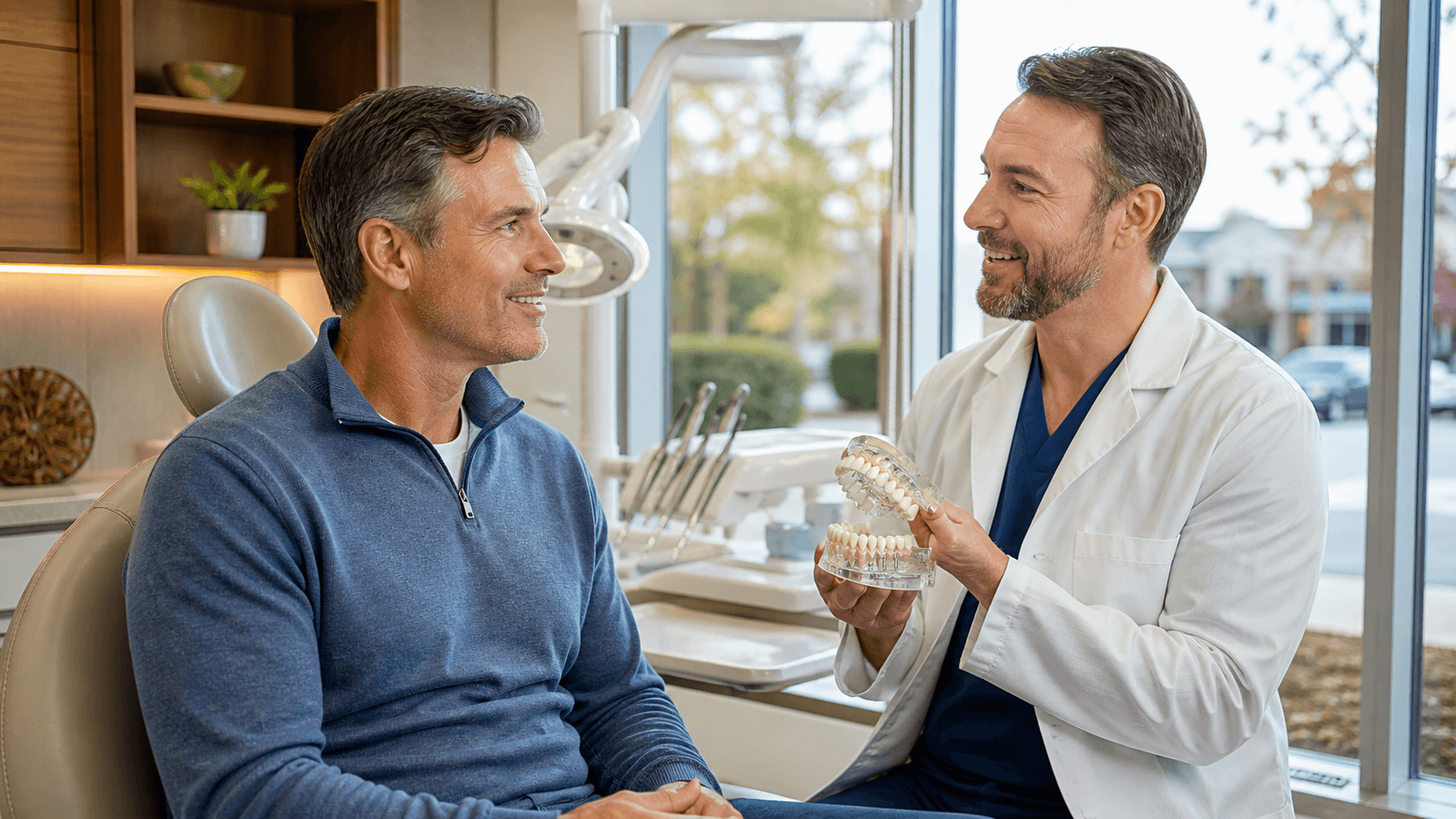
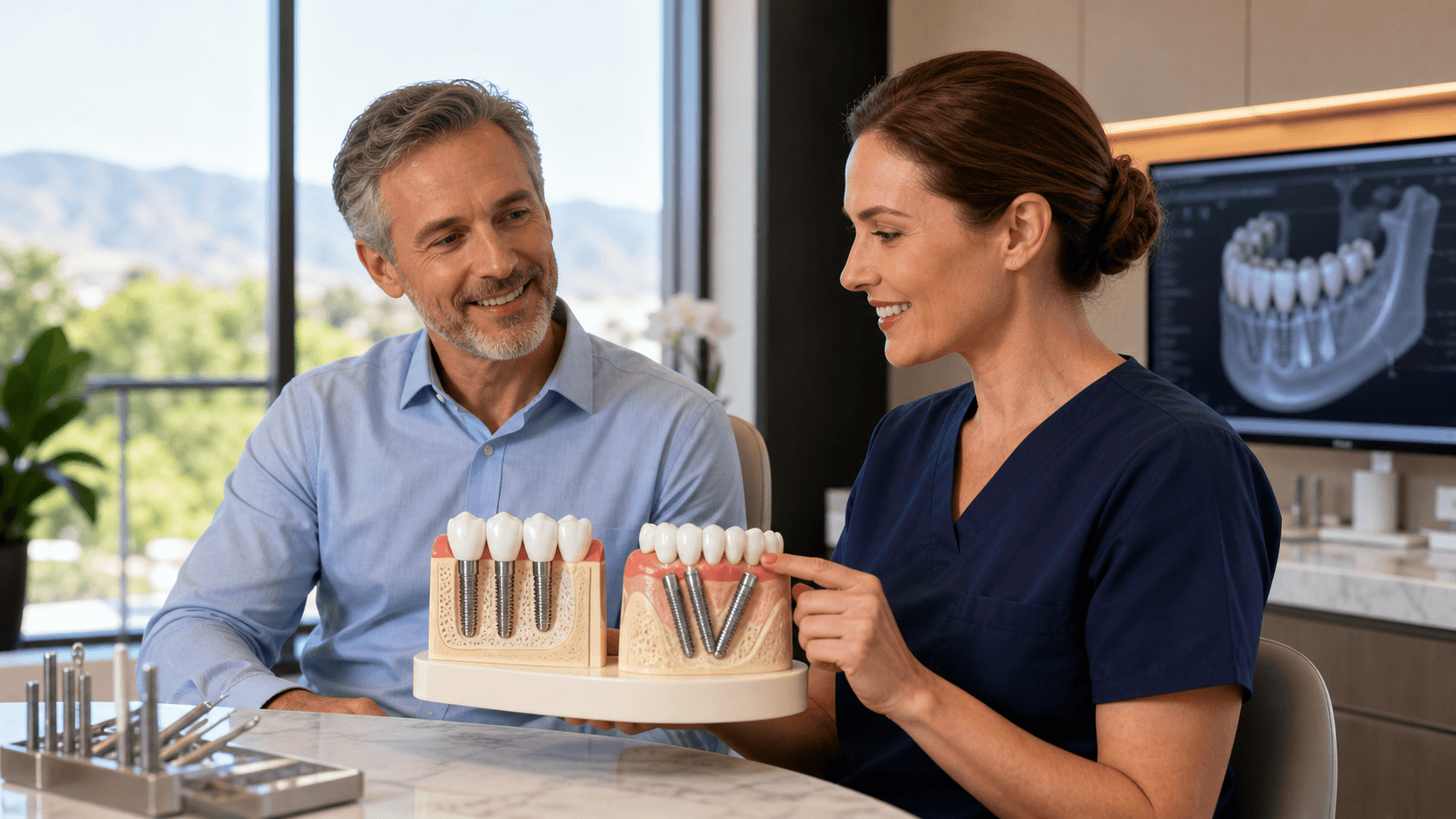
A gentle, no-pressure consultation should include 3D scans and a careful exam. This lets us see the exact shape and quality of your bone, instead of guessing. From there, we can clearly explain if dental implants without a bone graft are a safe choice for you or if a small, well-planned graft would give you a stronger, more stable result.
We also understand common fears, like:
- Worry about pain or a long recovery
- Anxiety about "choosing wrong"
- Concerns about the number of visits
We make it easy by keeping everything clear and simple. That means:
- Explaining each option in plain language
- Showing you 3D images of your own mouth
- Laying out a step-by-step plan so you know what happens and when
Many of our patients tell us they wish they'd taken this step sooner. One patient shared that after years of struggling with loose dentures, she finally enjoyed family dinners again without worrying her teeth would shift. Stories like this are why we do what we do.
When you start planning now, you give yourself time to heal, adjust, and then enjoy future holidays, trips, and family gatherings with a stable, confident new smile.
Take the Next Gentle Step Toward Fixed Teeth for Life
Think about what life could feel like once your treatment is complete. Biting into a fresh salad, a slice of pizza, or a crisp apple without worry. Smiling in photos with children and grandchildren without trying to hide your teeth. Waking up each morning knowing your teeth will feel solid and comfortable all day.
Whether your best path involves a bone graft or a graftless full-arch solution, the goal is the same: comfortable, confident, long-lasting results that feel like a natural part of you. At Ridgetop Dental Implants in Northern Virginia, we focus on advanced technology, experience, and compassionate care so you can smile with confidence.
Patient care comes first. You're in good hands, and there is no judgment, only solutions and a clear plan toward *one-visit fixed teeth with full-arch dental implants*. We're here to be your trusted dental home for full-arch dental implants and long-term smile health.
Discover a Confident Smile With Stable, Long-Lasting Implants
If you are considering dental implants without a bone graft, we are here to help you understand your options and what to expect before, during, and after treatment. At Ridgetop Dental Implants, we take time to evaluate your oral health and design a plan that fits your unique needs and comfort level. Reach out today so we can answer your questions, review your goals, and see if you are a good candidate. To schedule a visit or speak with our team directly, please contact us.