
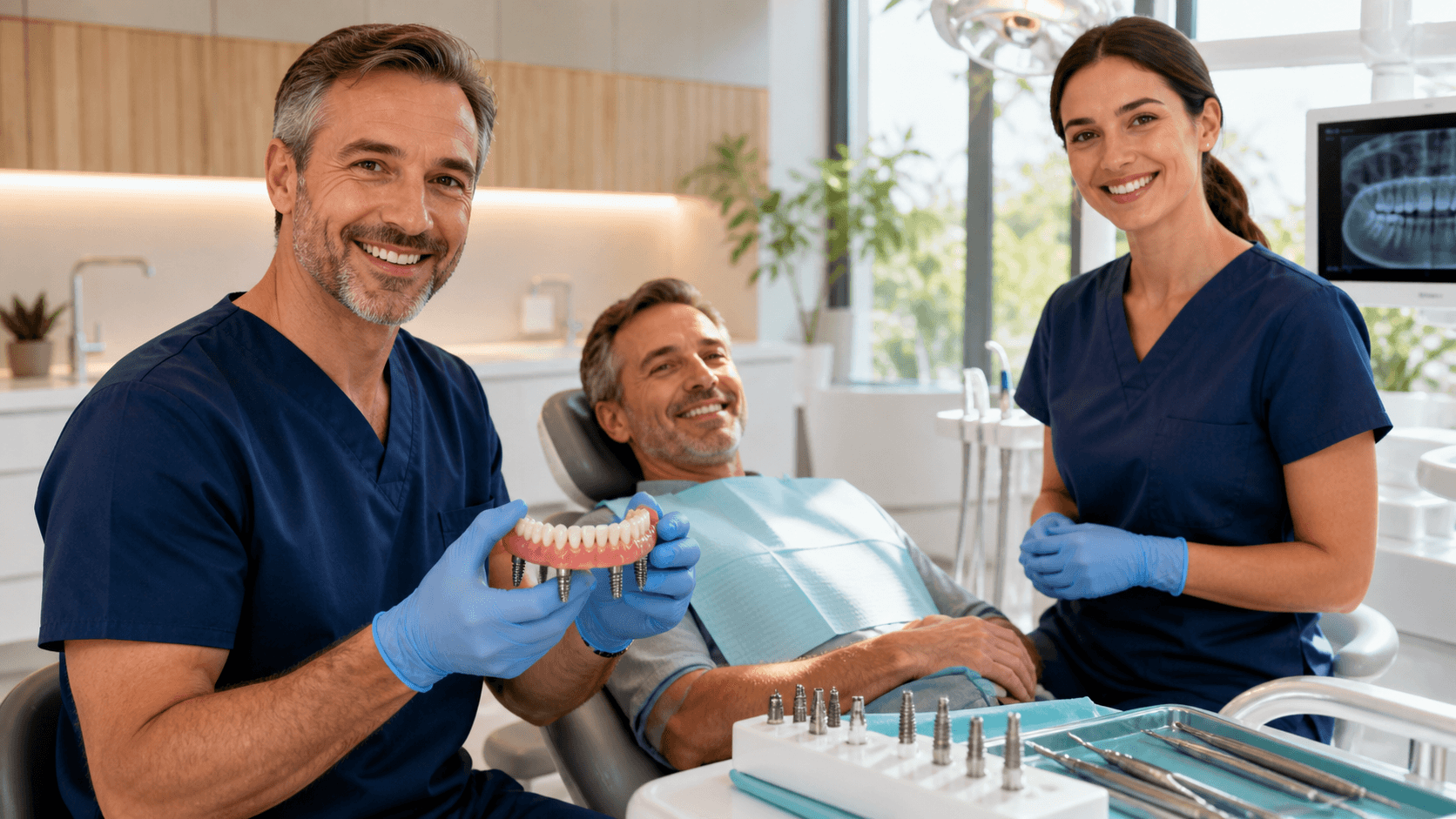
Enjoy a Secure, Confident Smile for Years
Fixed implant-supported dentures are designed to give you stable, comfortable teeth you can rely on all day, every day. If you are tired of loose dentures, sore spots, sticky adhesives, or feeling like you have to baby every bite, it is normal to wonder how long a more permanent option will really last.
With fixed implant-supported dentures, a full arch of teeth is attached to dental implants in your jaw. The teeth stay in your mouth. They do not come in and out at home, and they are made to handle everyday life, from breakfast to bedtime.
In this article, we will walk through how long fixed implant-supported dentures usually last, what normal wear looks like over time, when repairs or adjustments are needed, and how to tell if it is time for a refresh or replacement. Our focus at Ridgetop Dental Implants is always on patient comfort, modern technology, and long-term results, so your new smile feels like a part of you.
Many people who choose this option after years of frustration say they finally feel free to eat, laugh, and take photos again without worrying about their teeth. That kind of everyday confidence is exactly what we want for you too.
How Long Fixed Implant-Supported Dentures Can Last
When we talk about how long fixed implant-supported dentures last, we are really talking about two parts that work together:
- The implants in the bone
- The fixed bridge, the teeth and pink "gum" portion you see
The implants in your jaw are designed to be long term. With good planning, healthy bone, and proper care, they can last for many years. The fixed bridge that attaches to those implants may need to be refreshed or replaced sooner, because it takes the direct chewing forces and normal wear of daily life.
A general way to think about it is:
- Implants, long-lasting when cared for and checked regularly
- Fixed bridge, may eventually need replacement after years of normal wear and tear
Every mouth is different, so there is no single number that fits everyone. Some people are gentle chewers, others clench or grind. Some have health conditions that affect healing. Some are very consistent with cleanings and home care, others need a bit more help staying on track.
Key things that affect longevity include:
- Bone quality and thickness around the implants
- Bite forces, especially if you clench or grind at night
- Medical conditions like diabetes or autoimmune issues
- Smoking or tobacco use
- Daily brushing and cleaning around the implants
At our Sterling office, we rely on careful imaging, digital planning, and high-quality materials to improve comfort and predictability. Advanced scans help us place the implants where the bone is strongest, and digital designs help us shape your bite so the forces are spread as evenly as possible. You are never expected to get everything perfect on your own. Regular checkups give us a chance to spot tiny changes early so we can protect what you have.
Everyday Wear, Comfort, and What Is Normal Over Time
Even the best-made fixed implant-supported dentures will show small signs of everyday life over the years. That is normal. You may eventually notice:
- Faint scratches or scuff marks on the teeth
- Mild color changes from coffee, tea, or red wine
- Slight smoothing of the biting edges
These changes do not mean anything is wrong. Your new teeth are there so you can eat real food and enjoy real moments, not live on soup forever. They are built to handle favorite meals, busy schedules, and seasonal treats like crisp apples or corn on the cob, while still protecting your implants and jaw.
Long-term, comfort should feel like this:
- Teeth that do not rock or move when you talk or chew
- No regular sore spots on your gums or cheeks
- Clear speech, without long-term lisping or clicking
- Confidence that your teeth will stay put when you smile or laugh
Some subtle changes are worth a closer look, even if they are not emergencies:
- A light clicking sound when you chew in certain spots
- A small chip in one of the teeth
- A feeling that your bite is slightly "off" or shifted
- Food packing more often around specific areas
These issues are usually handled with small adjustments, smoothing, or repairs. There is no judgment, only solutions. Our job is to help you stay comfortable, not to lecture you about wear and tear that comes from simply living your life.
Repairs, Adjustments, and When to Call Your Dentist
Fixed implant-supported dentures are strong, but they still need tune-ups from time to time. Common repairs and adjustments include:
- Tightening or replacing tiny screws that hold the bridge in place
- Reshaping small areas that rub your tongue or cheeks
- Smoothing or repairing chipped teeth
- Refreshing worn biting surfaces
- Polishing or adjusting the pink "gum" areas for a better feel
You should contact your dentist if you notice:
- Sudden looseness in the teeth or the entire bridge
- A cracked or broken section of the teeth or pink base
- Soreness that does not improve after a day or two
- New trouble chewing foods that used to be easy
- Changes in speech that appear out of the blue
During a repair visit, you can expect a calm, unhurried appointment. We start with a gentle exam, ask about what you are feeling, and then go step by step through your options. The goal is simple: to get you comfortable again as quickly and safely as possible.
It is almost always easier to fix a small problem early than a big one later. Quick repairs tend to be simpler, more comfortable, and less involved than waiting until something breaks in a big way. If you have had stressful dental visits in the past, please know that you are in good hands. Our entire team focuses on making every visit as easy and reassuring as we can.
Knowing When It Is Time to Replace Your Fixed Bridge
There is a difference between routine touch-ups and a full replacement. Often, the implants in your jaw stay healthy and solid, while the fixed bridge on top eventually needs a fresh start after many years of service.
Signs that it may be time to talk about replacement include:
- The same area needing repairs again and again
- Noticeable wear, stains, or an overall "tired" look
- Changes in your facial shape as you age, so the teeth and gums no longer match your face as well
- Feeling that your smile no longer reflects how you want to look or feel
The idea of starting over can feel overwhelming. The good news is that we can often keep the existing implants in place and build a new bridge that fits them. With modern digital scans and updated materials, creating a new fixed bridge can sometimes be smoother and more customized than the first one.
Some people like to plan a replacement around their own calendar, for example, choosing a time of year when work is a bit lighter or when family events are coming up. That way, they can enjoy gatherings and photos with a refreshed smile that feels like them.
Needing a new bridge is not a failure. It is simply part of long-term care, very similar to updating a favorite pair of glasses or replacing a well-loved car that has served you well for many years.
How to Help Your Implants Last for the Long Haul
You do not need a complicated routine to help your fixed implant-supported dentures last, but you do need a consistent one. A simple daily plan might include:
- Brushing twice a day with a soft brush around the teeth and gumline
- Using special brushes or flossing tools designed for implants
- Cleaning under the bridge as instructed, so the area stays fresh
Lifestyle habits matter too. You can protect your investment by:
- Keeping medical conditions, like diabetes, well managed with your doctor
- Avoiding smoking and tobacco products
- Using a custom night guard if you clench or grind
- Being careful with very hard foods that can chip any kind of teeth
Professional maintenance plays a big role. Regular visits allow for:
- Professional cleanings that are gentle on implants but thorough
- X-rays when needed to check the bone and implants
- Bite checks to make sure the forces are balanced and not overloading one area
We often compare caring for fixed implant-supported dentures to caring for a high-quality car or favorite kitchen appliance. When you clean it regularly and bring it in for simple maintenance, it tends to treat you well for a very long time.
We know life is busy. At Ridgetop Dental Implants, we make it easy by helping you plan visits that fit your schedule, sending reminders, and taking time to answer every question. Patient care comes first. There is no judgment, only solutions, and our goal is always the same: to help you smile with confidence, now and for many years to come.
Restore Confident Eating And Smiling With Stable New Teeth
If you are ready to replace slipping, uncomfortable dentures with a secure, long-term solution, we can help. At Ridgetop Dental Implants, our fixed implant-supported dentures are designed to look, feel, and function like natural teeth. Schedule a consultation so we can review your goals, evaluate your oral health, and design a personalized treatment plan. Have questions before you book? Just contact us and our team will walk you through your options.