
Regain Your Smile: What to Expect From the Timeline
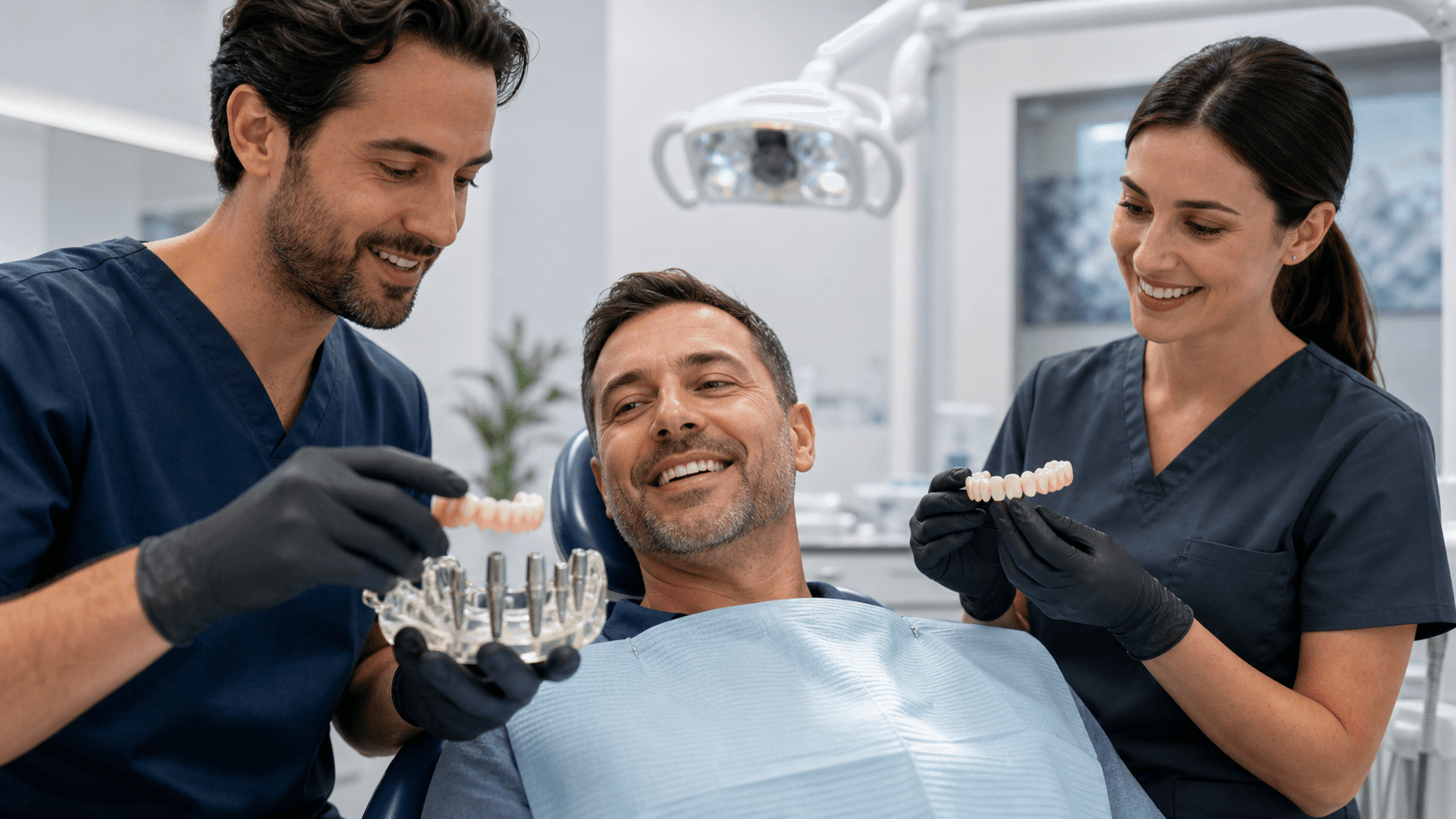
Full mouth dental implants are designed for people who are missing many or all of their teeth, have teeth that cannot be saved, or feel frustrated with loose dentures. Instead of dealing with removable teeth, full mouth implants use a series of implants placed in the jaw to support a fixed set of replacement teeth. The goal is simple: a stable, natural-looking smile that stays in place when you talk, laugh, and eat.
One of the biggest questions we hear is how long it actually takes to go from the first visit to a final new smile. The truth is, there is no one-size-fits-all answer, because everyone's mouth, health, and goals are different. What we can share is what the process typically looks like and the main stages you can expect along the way.
At Ridgetop Dental Implants in Virginia, we provide complete care in one location, including sedation dentistry. That means we handle your consultation, 3D imaging, extractions, implants, and final teeth under one roof, which helps keep your treatment more coordinated and less stressful. In this article, we will walk through the usual phases (consultation, planning, preparation, surgery, healing, and final teeth) and explain why your personal timeline for full mouth dental implants in Virginia may be shorter or longer than someone else's.
- Consultation and planning
- Preparation (extractions and any grafting)
- Implant surgery
- Healing and follow-ups
- Final teeth placement
Your First Visit: Consultation, Exam, and Custom Plan
Your first visit is where we learn about you, not just your teeth. We start with a conversation about your health history, any medications, and conditions that might affect healing. We also talk about your smile goals, how missing or failing teeth affect your daily life, and any worries you have about cost, time away from work, or fear of dental treatment.
Next, we move into a detailed diagnostic phase. This typically includes a 3D CBCT scan to see your jawbone in three dimensions, digital photos, and a thorough exam of your gums, bite, and any remaining teeth. With this information, we can see how much bone you have, whether there is infection, and where implants can be placed safely and predictably.
Based on what we find, we create a personalized treatment plan, including an estimated timeline. This plan covers whether teeth need to be removed, whether you might need bone grafts or a sinus lift, and what type of temporary teeth you will wear along the way. Every step is explained so you know what will happen and in what order.
Because we provide all phases of care in-house, you are not sent from office to office for scans, surgery, and restorations. That level of coordination can often mean fewer separate appointments and a smoother process for full mouth dental implants in Virginia.
Preparing Your Mouth: Extractions, Grafts, and Temporary Options
If you still have teeth that cannot be saved, we almost always address those early. In many cases, we can remove bad teeth and place implants in the same visit, especially when we are placing multiple implants for a full arch. Other times, if there is extensive infection or not enough bone, we might need to stage extractions and allow some healing before placing implants.
Bone grafting and sinus lift procedures are common parts of preparing for implants. In simple terms, a bone graft adds or thickens the bone where implants will be placed. A sinus lift gently raises the sinus floor in the upper jaw to create enough room for implants. Healing for these procedures can range from several weeks to a few months, depending on how much work is needed and how your body responds.
Most people are nervous about being without teeth, especially in the front. We plan carefully so you are rarely, if ever, without something in the smile zone. This may be a custom temporary denture, a modified version of your existing denture, or a temporary bridge that attaches to your new implants when appropriate.
Our sedation options help make longer or more complex visits more comfortable. When you are relaxed and safely sedated, we can often perform multiple steps in a single appointment, which can reduce the total number of visits.
Implant Surgery Day: Placing the Foundation for Your New Smile
On implant surgery day, our focus is on comfort and precision. We begin with sedation so you are relaxed and then use a local anesthetic to keep the area pain-free. Guided by the 3D imaging and your treatment plan, we place multiple implants into the jaw at specific angles and depths, then check their stability and your bite.
In some cases, we can place a fixed temporary bridge on your implants the same day, a process sometimes called immediate loading. This allows you to leave with a set of teeth that stay in place, while your implants heal beneath the surface. In other situations, especially when bone quality requires a bit more caution, we may use a removable temporary option while the implants heal before attaching fixed teeth.
Recovery from implant surgery usually includes some soreness and swelling for a few days. With prescribed medications and detailed post-op instructions, most people are able to return to regular activities shortly after surgery, while avoiding hard or crunchy foods for a while.
Because we perform the planning, surgery, and sedation in our Virginia implant center, the entire process for full mouth dental implants in Virginia can often be arranged in a more time-efficient way than if you had to coordinate among multiple providers.
Healing, Final Teeth, and Long-Term Timeline
After implants are placed, the real magic happens under the surface. Osseointegration is the natural process where your jawbone grows and bonds to the titanium implants, locking them in like artificial tooth roots. This generally takes a few months, often in the range of about three to six months, depending on your overall health, bone quality, and whether grafting was performed.
During this period, you will have follow-up visits. We check your healing, make any needed adjustments to your temporary teeth or dentures, and begin planning your final teeth. Digital scans and photos help us design your permanent prosthetic, which may be made from zirconia or other strong, attractive materials chosen for your specific case.
When it is time to attach your final teeth, we remove the temporary bridge or denture and place the new prosthetic on your implants. We carefully check the fit, your bite, and how your new smile looks when you talk and smile naturally. Fine-tuning adjustments are made so your bite feels balanced and comfortable.
For someone with healthy bone and no need for major grafting, the overall timeline might be relatively short, often a few months from surgery to final teeth. For someone requiring significant grafting or staged procedures, the process can stretch longer. The key is that every plan is personalized, so your timeline for full mouth dental implants in Virginia is based on your body's health and your treatment goals, not a generic schedule.
Take the Next Step Toward Your New Smile
When you look at the entire process, full mouth dental implants do take time, but much of that time is devoted to healing and stability, not constant appointments. Many people enjoy fixed temporary teeth very quickly, which lets them speak and smile with confidence while their implants integrate. After that healing period, they gain a long-term solution that feels stable and looks natural.
For people who are anxious, busy, or both, having start-to-finish care and sedation available in one Virginia location can make the process feel more manageable and predictable. Instead of worrying about every step, you know you have one team guiding you from your first scan to your final smile.
Transform Your Smile and Confidence With a Lasting Solution
If you are ready to fix missing or failing teeth with a stable, natural-looking result, our team at Ridgetop Dental Implants is here to help. Learn how full mouth dental implants in Virginia can restore your ability to eat, speak, and smile comfortably every day. We will walk you through your options, answer your questions, and create a custom treatment plan that fits your goals. To schedule a consultation or ask about next steps, please contact us today.