
Discover the Path to a Stable, Permanent Smile
Fixed teeth dental implants give adults with missing or failing teeth a way to have teeth that stay in place all day, every day. Instead of removing dentures at night or worrying that they might slip during a meal, fixed implant teeth are designed to feel as close as possible to natural teeth in comfort and function. For many people, that means eating with confidence again and smiling without hesitation.
When we talk about "fixed teeth," we mean non-removable teeth that are attached to dental implants, not dentures that sit on the gums. Full-arch and full-mouth options, such as All-on-6-style solutions, use several implants to support an entire arch of teeth. These systems are planned to restore chewing strength, improve appearance, and give patients a permanent smile solution.
Our goal in this article is to walk you through how to find trusted providers near you that focus on fixed teeth dental implants. We will explain your implant options, what to look for in a center, how to search online, and what to ask during your consultation so you can move forward with clarity and confidence.
Understanding Fixed Teeth Dental Implants and Your Options
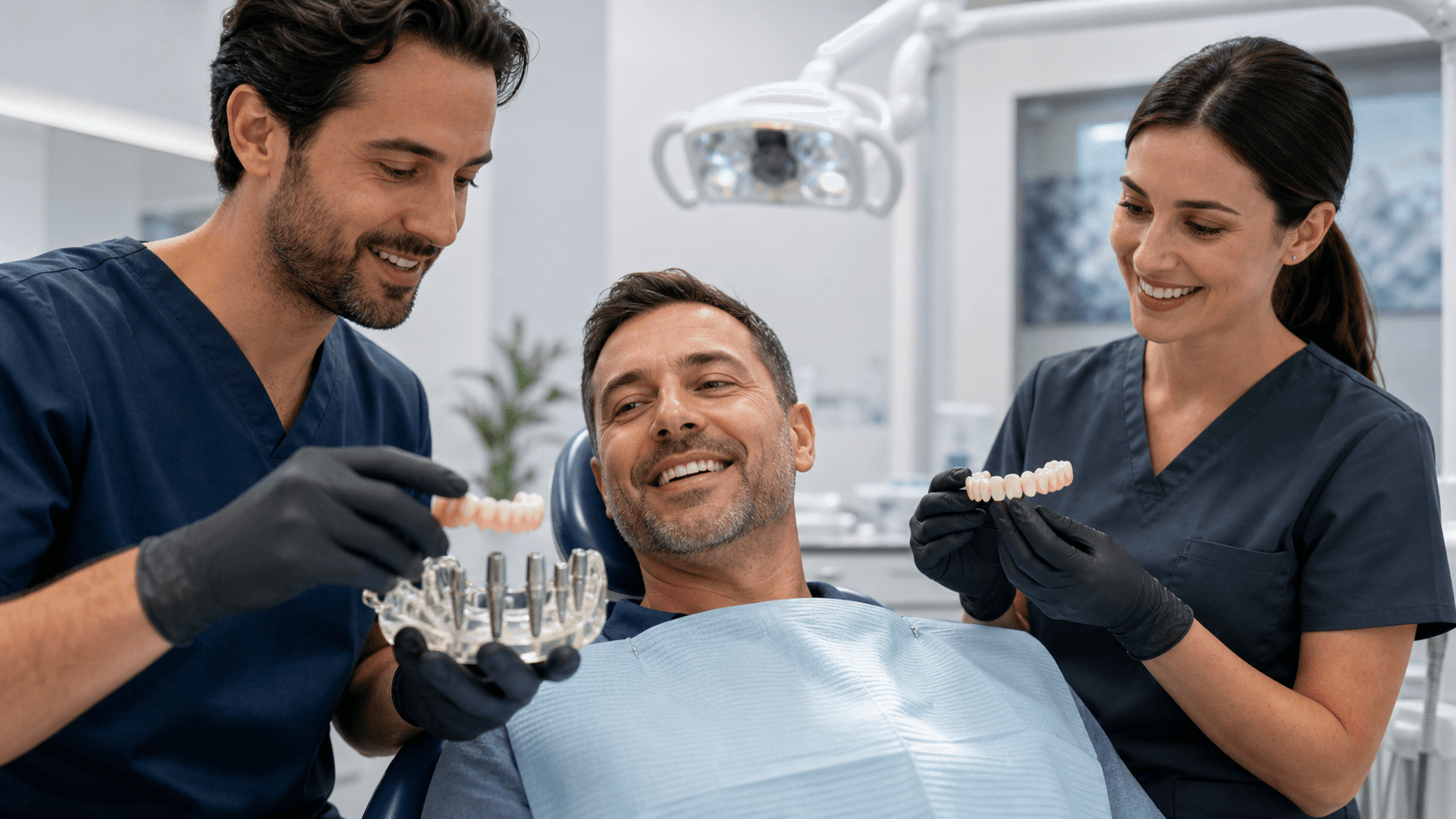
Fixed teeth dental implants start with small titanium posts placed in the jawbone that act like artificial tooth roots. These implants fuse with the bone over time, creating a stable base for a custom bridge of teeth that is secured in place. The final result is a set of teeth that stays in your mouth, is brushed like natural teeth, and is not removed at home.
There are several full-arch approaches that fall under the umbrella of fixed teeth dental implants. Common options include:
- All-on-4-style solutions, which use four implants per arch in many cases
- All-on-6-style solutions, which use six implants per arch for added support
- Full-mouth implant systems, which restore both upper and lower arches with coordinated planning
The right number of implants and the type of bridge are chosen based on bone quality, bite, and overall oral health. Some patients do well with fewer implants, while others benefit from the added stability of more.
Good candidates for fixed teeth implants usually have adequate jawbone to support implants, or they are able to have bone grafting if needed. General health matters too, because conditions like uncontrolled diabetes or smoking can affect healing. Many people who currently wear dentures or who have multiple failing teeth can be considered for full-arch or full-mouth implants. If you are tired of loose dentures, or you are facing the loss of several teeth, these solutions might be worth exploring with an implant provider.
What to Look for in a Dental Implant Center Near You
Not every dental office focuses on full-arch, fixed teeth dental implants. When you start your search, it helps to know which qualities separate a true implant center from a general practice that only occasionally places implants.
Look for a team with specific training and experience in implant dentistry, especially in full-arch and full-mouth cases. These cases are more complex than single implant crowns, and they require an understanding of bite, smile design, and long-term function. Ask how many full-arch cases the office manages on a regular basis, not just whether they "do implants."
Modern technology is another key factor. Practices that use 3D imaging, digital planning, and guided surgery can plan implant placement more precisely. This tends to support better-fitting restorations and a smoother treatment experience.
There is also real value in having a team-based, in-house approach. When the surgical dentist, restorative dentist, and lab support work together under one roof, planning and adjustments are usually more streamlined. That can mean:
- Fewer visits spread across different offices
- More consistent communication about your case
- Faster adjustments if something needs to be refined
- A clearer picture of the total treatment plan from the start
Smart Ways to Search for Fixed Teeth Options in Your Area
When you begin looking online, the phrases you type into a search bar can shape the results you see. Instead of just typing "dental implants," try pairing your location with more specific terms such as "full-arch implants," "fixed teeth dental implants," or "full-mouth dental implants." This helps you find practices that highlight these services as a core focus.
Once you have a list of potential centers, take a few minutes to look through their online presence. Helpful things to look for include:
- Before-and-after photos of full-arch or full-mouth implant cases
- Patient testimonials that describe fixed teeth, not just single implants
- Educational articles or videos explaining full-arch treatment steps
- Clear descriptions of the types of implant solutions they offer
It is also smart to think about more than just the shortest drive. Convenience can come from features like on-site 3D imaging, sedation options for anxious patients, and treatment protocols that minimize the number of visits. A slightly longer drive to an implant-focused center may be worth it if it gives you a smoother experience from start to finish.
Questions to Ask During Your Implant Consultation
Your consultation is your chance to get clear answers, and compare different offices. Going in with a written list of questions can keep you from forgetting something important.
Clinical questions might include:
- How many implants will support each arch, and why that number for your case?
- What type of fixed bridge or prosthesis will be used?
- What is the expected lifespan of the implants and the bridge with good care?
- What is the plan if an implant fails or a part needs maintenance in the future?
Comfort and safety are just as important. Be sure to ask about:
- Which sedation options are available and recommended for you
- Whether you might need bone grafting or sinus lifts, and why
- What to expect during recovery, including typical healing times
- How the office cares for patients with dental anxiety or medical conditions
Finally, be very clear on finances and logistics:
- What is the total estimated cost for treatment from start to finish?
- What exactly is included in the quote, such as extractions, temporary teeth, and follow-up visits?
- Is there any warranty or policy for repairing or adjusting the final bridge?
- Are payment plans or third-party financing options available?
The right implant center will welcome your questions and explain answers in terms that make sense, without rushing you into a decision.
Choosing Ridgetop Dental Implants as Your Virginia Implant Partner
At Ridgetop Dental Implant Center in Virginia, our practice is focused on full-arch and full-mouth implant solutions for patients with missing or failing teeth. We place a strong emphasis on fixed teeth options, including All-on-6-style treatments, for those who want permanent, stable smiles instead of removable dentures.
Our team is dedicated to planning implant care with technology-driven tools such as 3D imaging and digital design, guiding each step from surgery through final restoration. We regularly see patients who have complex situations, such as multiple failing teeth, long-term denture use, or concerns about chewing and speaking in public. By concentrating our work on these types of cases, we aim to provide thoughtful, personalized treatment plans that address function, appearance, and long-term maintenance.
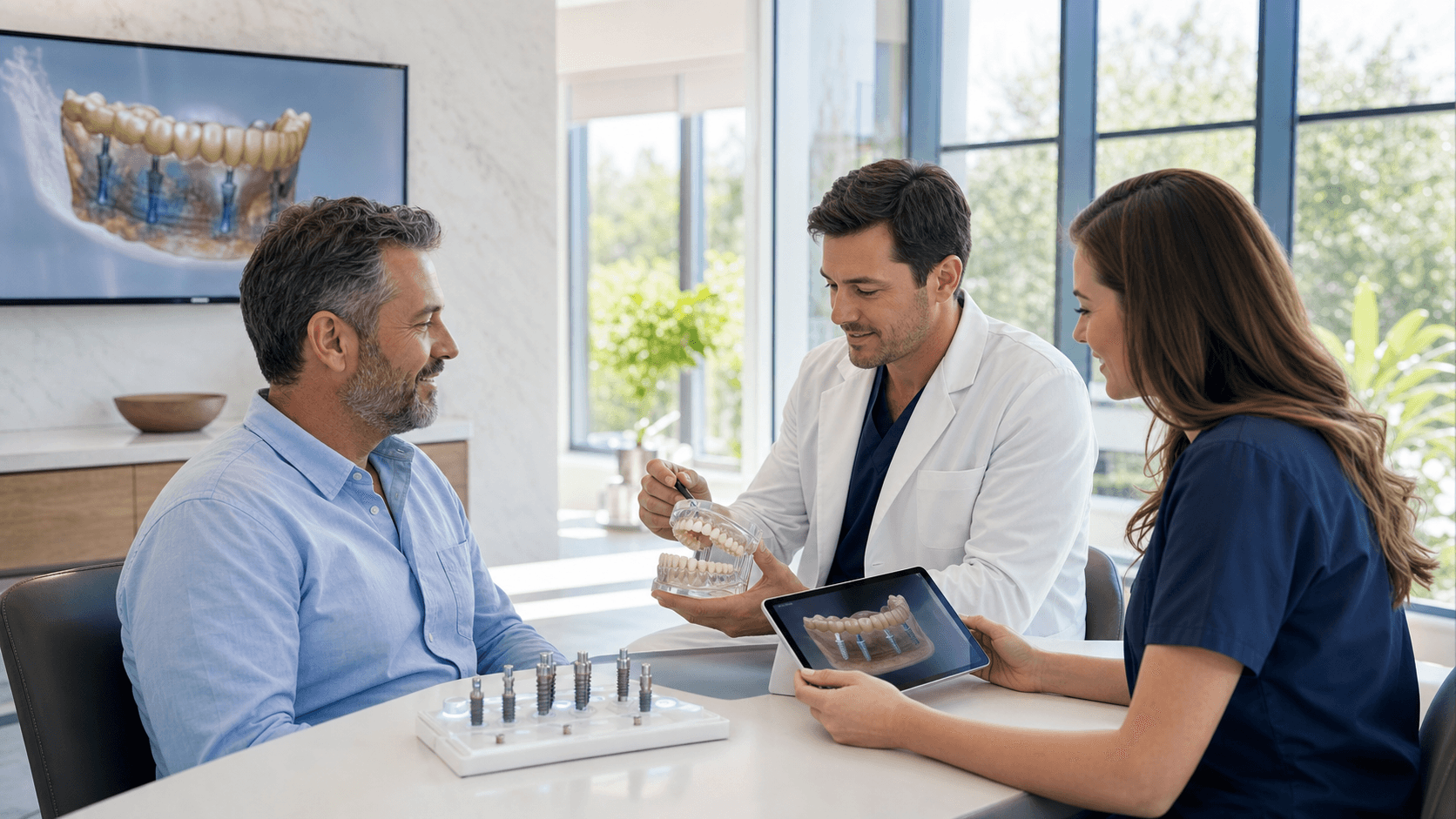
When you visit us for an evaluation, you can expect a clear conversation about your current oral health, your goals, and the different fixed teeth dental implants that may fit your needs. We will review scan images with you, discuss timelines, and outline a step-by-step plan so you know what to expect at every stage of treatment. Our priority is to help you move from uncertainty to a realistic, confident vision of what your new smile can be.
Restore Confident Function And Comfort With Lasting Implant Solutions
If you are ready to replace slipping dentures or missing teeth with a stable, natural-looking smile, we can help you explore whether fixed teeth dental implants are right for you. At Ridgetop Dental Implants, we focus on treatment plans that look good, feel comfortable, and are practical to maintain long term. Reach out so we can answer your questions, review your options, and outline a personalized path forward. To schedule a visit or consultation, please contact us today.