When Dentures Stop Working and You Need Answers Now
Dentures are supposed to help you feel normal again, not make you nervous every time you eat or smile. When they start slipping during a cookout, rubbing sore spots on your gums, or even cracking during everyday life, it can feel frustrating and embarrassing.
If you're tired of worrying about what your teeth will do in public, you're not alone. Many people eventually reach a point where dentures no longer feel like "them" and they want something that feels more stable and natural. Immediate dental implant placement can sometimes be a way to move straight from dentures that aren't working well anymore to secure teeth without a long gap in between.
At Ridgetop Dental Implants in Sterling, Virginia, we focus on advanced implant solutions with a warm, patient-first approach. No judgment, only solutions. We care about helping you feel calm, prepared, and in control, especially when you feel like your dentures have let you down. We make it easy to understand your options so you can choose what feels right for you.
Who Qualifies for Immediate Implant Placement After Dentures
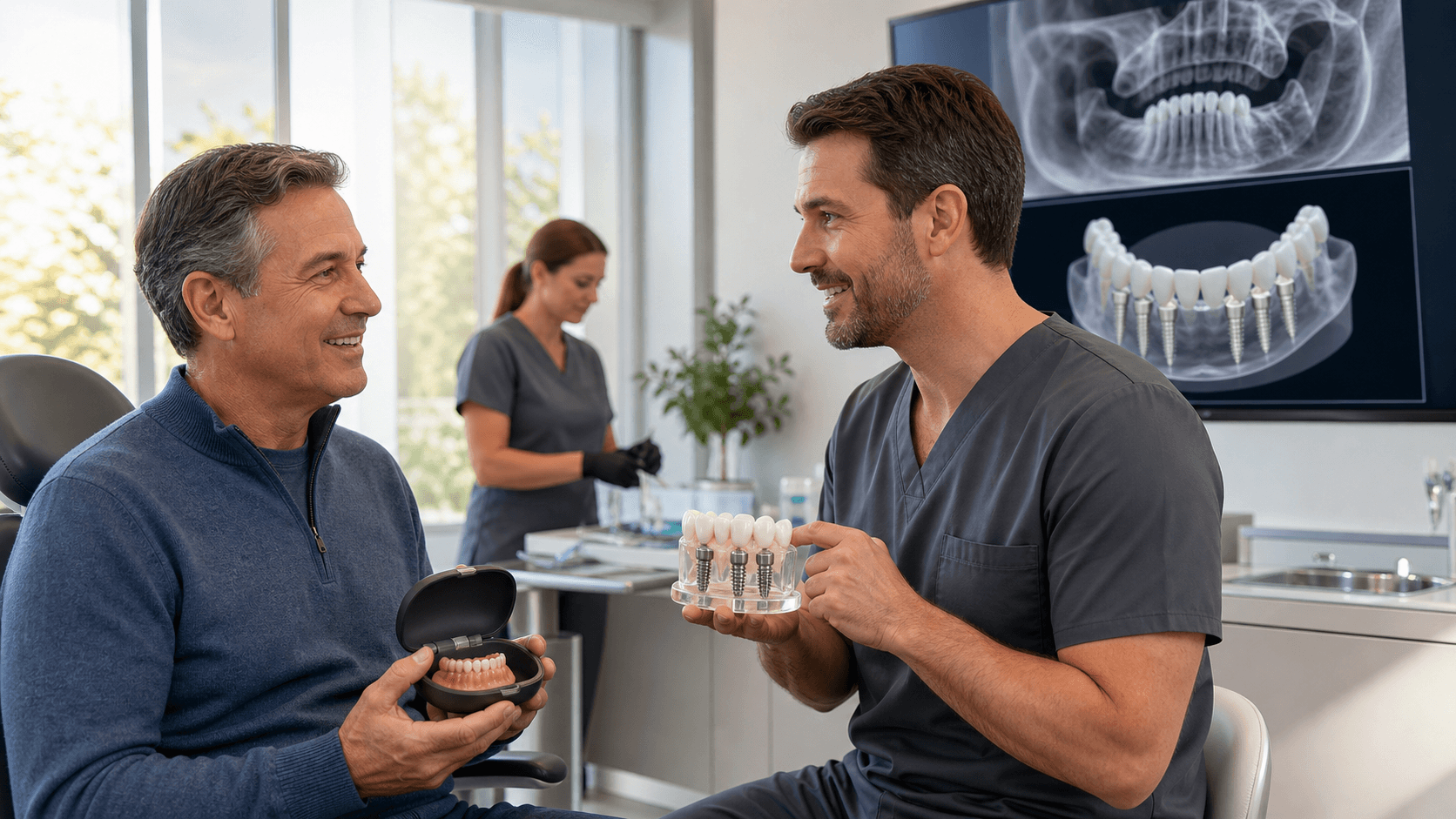
Immediate dental implant placement usually means this: if you still have uncomfortable or painful teeth under your dentures, those teeth are removed and dental implants are placed in the same visit. In many cases, temporary teeth are attached to those implants so you can leave with a full smile.
The best candidates usually have:
- Good general health and any medical conditions under control
- Enough healthy jawbone to hold implants securely
- A willingness to pause or quit smoking to help healing
- Realistic expectations and a promise to follow home-care instructions
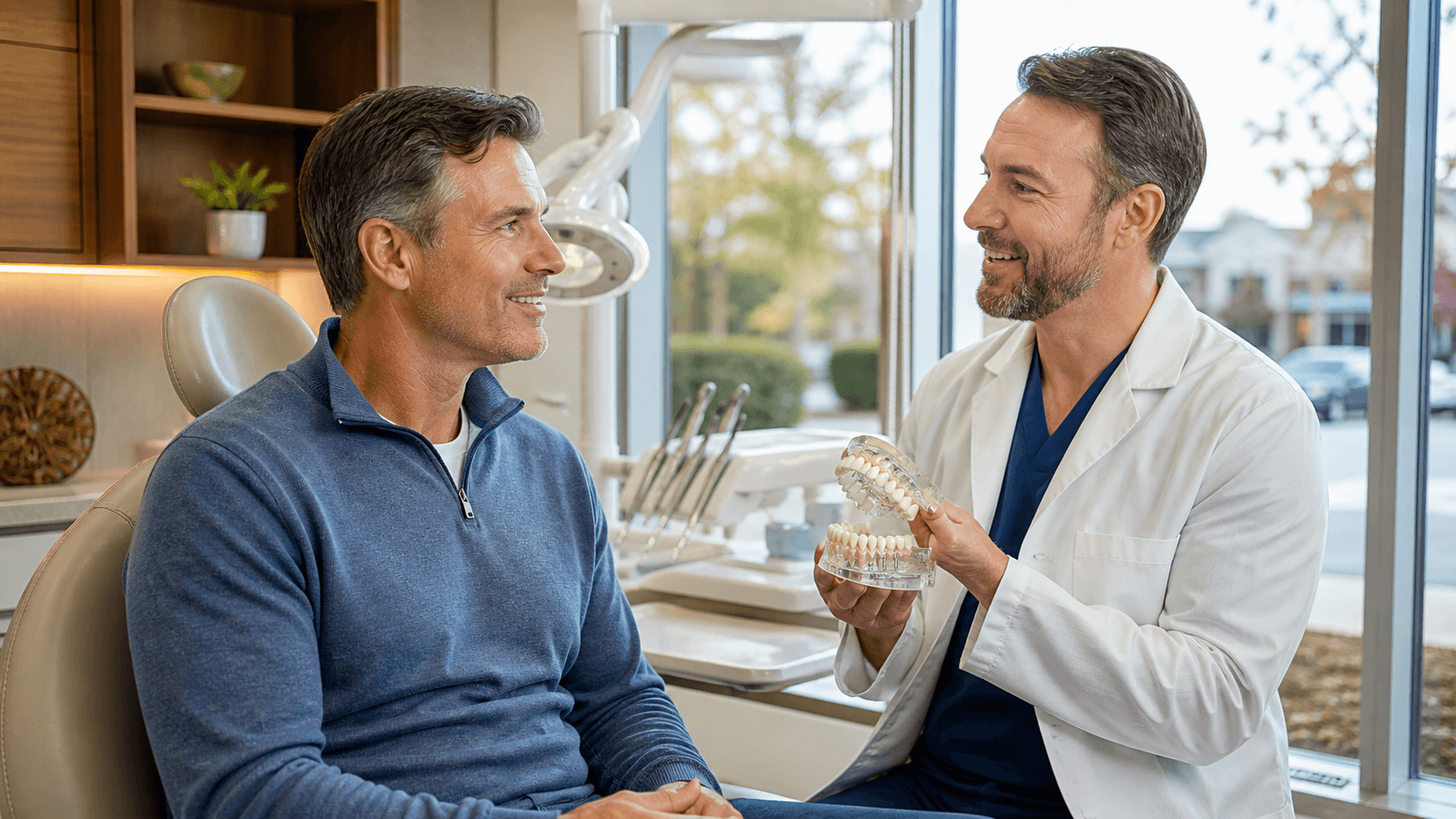
At our office, the process starts with a relaxed consultation. We spend time talking with you about:
- What bothers you about your current teeth or dentures
- How you want to eat, speak, and smile in daily life
- Any fears you have about dental treatment
We use digital 3D scans, photos, and a gentle exam to see your bone, gums, and bite. From there, we create a plan that fits your life, whether that's a full arch of implants, several teeth in one area, or a single missing tooth.
Many patients tell us that when they go from loose dentures to implant-supported temporary teeth, they feel a huge sense of relief. One patient shared that she went from covering her mouth when she laughed to enjoying family dinners again, no worries about slipping dentures, just steady comfort. They feel more like themselves when they can laugh without worrying and enjoy a meal without thinking about their dentures every second.
When Same-Day Implants Are Not Possible and What Happens Next
Sometimes, placing implants right away is not the safest choice. We're always honest about that, because patient care comes first.
Reasons you may need to wait include:
- Active infections in the gums or bone
- Very thin or delicate jawbone that needs to be built up
- Uncontrolled health conditions like blood pressure or diabetes
- Certain medications that affect healing or bleeding
If we say "not yet," we're not saying "never." We're saying, "Let's get you healthy so your implants can last."
When same-day placement isn't possible, a step-by-step plan may look like this:
- Treating infection with care and giving the area time to heal
- Doing bone grafting or sinus lift procedures so there's enough support for implants
- Upgrading or adjusting temporary dentures or partials so you can still smile, work, and eat softer foods with confidence while you heal
Our advanced imaging and planning tools help us map out your timeline clearly. You always know what's happening next and why, so there are no surprises. You're in good hands every step of the way.
Many patients who had to wait a few months tell us it was worth it. By giving the bone time to repair and strengthen, the implants can feel more stable and comfortable over the long term, which brings real peace of mind.
Your First 72 Hours with New Implants and Temporary Teeth
The day of surgery is usually a longer visit, but it's very organized. We walk you through every step, keep you comfortable, and check on you often. Many people leave that same day with secure temporary teeth attached to their new implants, so they can smile right away.
Here's what the first three days usually look like for most people:
- Day 1: As the numbness wears off, you may feel mild to moderate soreness. You rest, use cold compresses on your cheeks, and take the medications we prescribe as directed. Gentle relaxation and staying home are best.
- Day 2: Swelling is often a bit more noticeable now, and the area may feel tender. A soft-food diet helps, like soups, yogurt, mashed potatoes, scrambled eggs, and smoothies. You start gentle rinsing and follow the written instructions we send home with you.
- Day 3: The swelling often begins to calm down. For many, the strong soreness shifts to more of a dull ache. Patients are often pleasantly surprised that it feels more comfortable than they expected.
For pain management, we combine modern numbing methods with medications that are easy to understand and follow. We explain exactly:
- What to take and when
- How to pair medication with food and rest
- Which signs mean you should call our office
We make it easy to know what to do at home so you can focus on resting and healing.
You also get clear instructions for caring for your temporary teeth. This usually includes:
- Avoiding hard or sticky foods while the bone starts to bond with the implants
- Gently cleaning around the teeth as directed
- Coming in for follow-up visits so we can make sure everything is healing as planned
Those first 72 hours may look intimidating on paper, but they usually pass quickly. Day by day, you feel more stable and more confident. Many people start thinking ahead to social events and meals without that nagging worry about dentures slipping or clicking.
Living with Stability While Your Implants Heal
After the first few days, you enter what we like to call the "healing season." The implants are quietly bonding with your jawbone. During this time, most people notice steady improvement in comfort and confidence.
Your temporary teeth are an important part of this phase:
- They protect the implants while they heal
- They give you a full, natural-looking smile during daily life
- They're designed more for comfort and appearance than for biting very hard foods
- They give you time to "test drive" your new look and share feedback before we make your final teeth
Daily life usually gets easier:
- You don't worry as much about teeth shifting when you talk or laugh
- You feel more at ease in photos and social situations
- Your cleaning routine is simpler, and you no longer need pastes or adhesives
We often see people go from avoiding photos to actually liking how they look in quick snapshots at family events, date nights, or work meetings. One gentleman told us he went from hiding at the back of group photos to proudly standing in the front row; that kind of change in self-esteem is one of the best parts of this kind of care.
Throughout the healing time, we see you regularly. We check how the implants and gums are doing, make small bite adjustments if needed, and answer questions. Our goal is to feel like your trusted dental home, like having a trusted friend in dentistry, a place where you always know you're in good hands and can smile with confidence.
Restore Your Smile Comfortably And Confidently
If you are ready to replace missing teeth without a long waiting period, our team at Ridgetop Dental Implants can help you explore whether immediate dental implant placement is right for you. We will walk you through every step, from your first consultation to follow-up care, so you always know what to expect. To schedule an appointment or ask questions about your options, simply contact us today.