
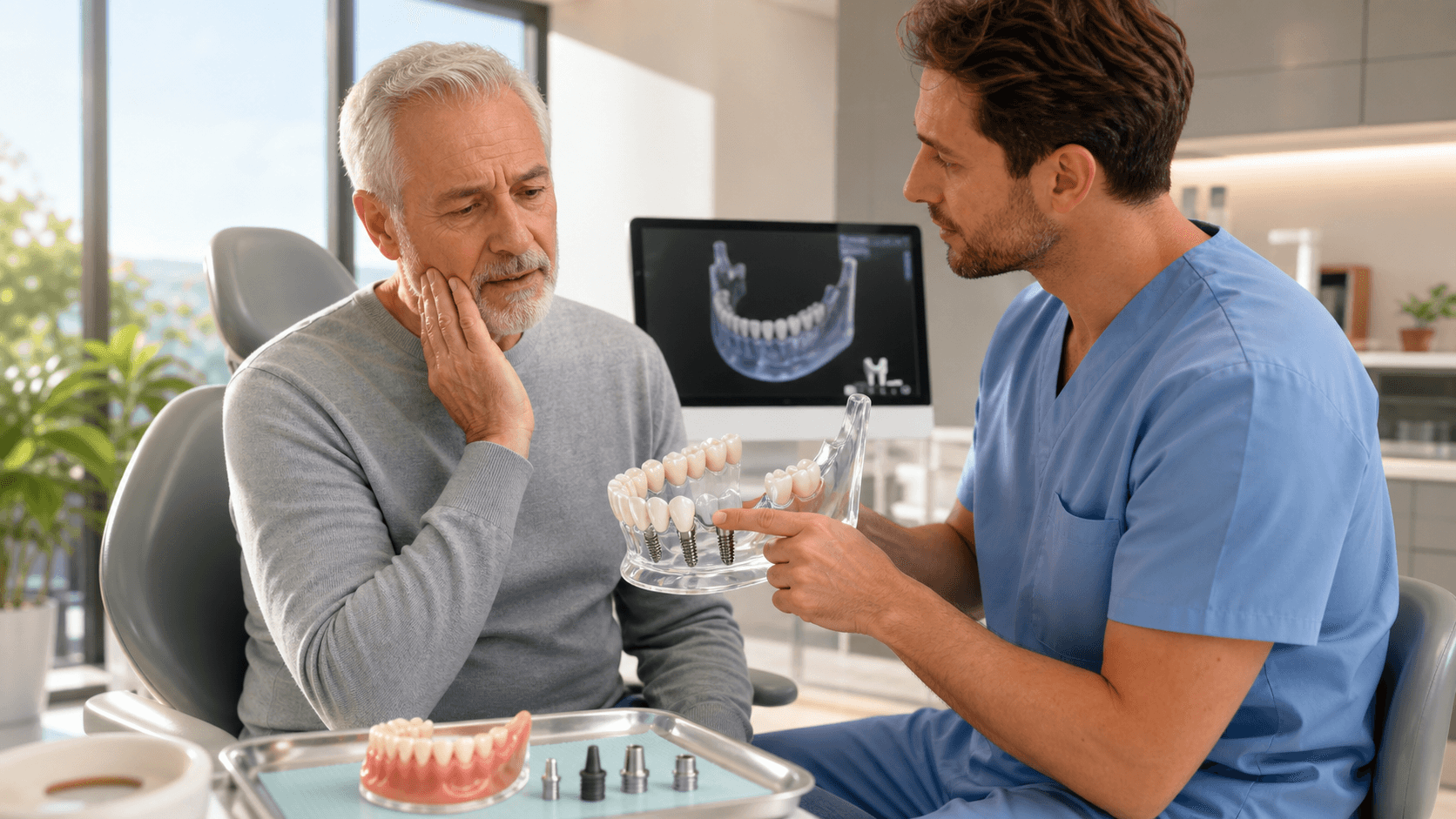
Stop Suffering in Silence: What Your Dentures Are Doing
Dentures are supposed to help you eat, speak, and smile with confidence, not leave you worrying about sore spots and embarrassing slips. If you are constantly adjusting your dentures, relying on adhesive, or avoiding certain foods because they are too hard to chew, your mouth is trying to tell you something. Those daily frustrations are not just an inconvenience, and they can be early warnings that your jawbone is changing under the surface.
As a dental implant center in Sterling, Virginia, we meet many people who feel stuck with dentures that never feel quite right. They often think they just need a better fit or a stronger adhesive. In reality, ongoing denture problems are often connected to jawbone loss. Modern jawbone-loss implants and full-arch solutions can help protect your bone, keep your smile more stable, and dramatically improve comfort.
How Dentures Affect Your Jawbone Over Time
Natural teeth do more than help you chew. Every time you bite down, the tooth roots send small, healthy forces into the jawbone. This regular stimulation tells the body to maintain that bone, keeping it strong and dense. When teeth are removed, that natural connection is lost.
Traditional dentures sit on top of the gums instead of being anchored into the bone. Because there are no roots, the jawbone is no longer receiving that daily signal to stay strong. The body slowly begins a process called bone resorption, where it breaks down and absorbs bone that is not being used in the same way anymore. This is a natural response, but in the mouth it creates new problems.
Even dentures that feel fine at first can contribute to gradual bone loss over the years. As the bone thins and shrinks, the gums change shape and the denture no longer matches the ridge it once fit. That can lead to the classic problems denture wearers know too well: slipping, rubbing, and a constant need for adjustments. Over time, the lower face can start to look shorter, and the cheeks and lips may appear more collapsed or "sunken."
The tricky part is that bone loss inside the jaw is usually painless at the beginning. You will not feel the bone thinning directly. Instead, you notice it later as your denture gets looser, your bite changes, and your facial appearance shifts. By the time it becomes obvious, a significant amount of bone may already be gone.
Hidden Red Flags: Signs Your Jawbone Is Shrinking
So how do you know if your denture problems are really bone problems in disguise? There are several common red flags that suggest your jawbone may be changing under your denture.
Functional warning signs include:
- Dentures that suddenly feel loose after fitting well in the past
- Slipping or popping up when you talk, laugh, or sneeze
- Needing adhesive almost every day just to keep them in place
- Struggling to bite into sandwiches, meat, or crunchy fruits and vegetables
Physical changes can also point to bone loss:
- Soreness or tiredness in the jaw, especially after eating
- Pressure points or sore spots that keep returning despite adjustments
- Frequent relines or remakes because your dentures "never stay right"
- A shorter-looking lower face or more pronounced wrinkles around the mouth
You may also notice changes in speech and overall comfort:
- A new lisp, slurring, or difficulty pronouncing certain words
- Clicking or clacking noises when your teeth come together
- Mouth sores that seem to heal slowly or recur in the same spots
- Chronic irritation under the denture that never fully goes away
These issues are often blamed on the denture alone, but the underlying jawbone is usually part of the story. If the foundation is shrinking, no amount of adjustments to the denture can fully solve the problem. Ignoring these signs allows bone loss to keep progressing, which can make future treatment more involved.
Why Jawbone Loss Matters for Your Long-Term Health
Jawbone loss is not just a cosmetic concern. It affects how you live every day. When dentures become unstable, many people start avoiding healthy foods that are harder to chew, like salads, nuts, or certain meats. That can slowly shift your diet toward softer, more processed options that are not as supportive of overall health.
Poor chewing can also put extra strain on your digestion. If food is not broken down well in your mouth, your stomach and intestines have to work harder. Over time, this can leave you feeling uncomfortable after meals and less interested in eating enough to stay strong and energized, especially as you age.
There is also the emotional side. If you worry that your dentures might slip when you speak or laugh, you may start to withdraw from social situations. Feeling that your face looks older or more collapsed than you would like can chip away at your confidence. Many of our patients tell us they feel out of sync with how they see themselves inside.
From a dental perspective, advanced bone loss can limit your options later. When the jawbone becomes very thin or uneven, it can be harder to place dental implants in the ideal positions. In some cases, additional procedures like bone grafting may be needed to rebuild support before implants can be considered. Preserving bone now keeps more doors open for future solutions, especially if you are thinking about full-arch or multiple-tooth replacement with implant-supported teeth.
How Dental Implants Help Protect Jawbone Health
Dental implants are designed to act like artificial tooth roots. They are placed directly into the jawbone, where they bond with the bone over time. When you bite and chew on implant-supported teeth, the forces travel down through the implants and into the bone, similar to how natural roots work. This stimulation can help slow or stop the bone resorption that happens under traditional dentures.
For people who are tired of removable dentures, full-arch and multiple-tooth implant solutions can provide a fixed, stable smile that does not come in and out. An entire row of teeth can often be supported by a small number of strategically placed implants. The result is a bite that feels much closer to natural teeth and allows you to chew more confidently.
At Ridgetop Dental Implant Center, we use advanced planning and implant technology to place implants with precision. In many cases, this approach allows patients to receive implants and fixed teeth on the same day, so they are not without a smile during the transition. That immediate stability can be a big relief for someone who has struggled with loose dentures for years.
Even if you have worn dentures for a long time or already have noticeable bone loss, it may still be possible to benefit from dental implants. Careful planning, strategic placement in areas where bone is stronger, and bone grafting techniques can sometimes create enough support for jawbone-loss implants. The key is to evaluate your jaw carefully and design a plan that fits your specific situation.
When to Seek Help for Protecting Your Jaw
If your dentures are getting looser, if you are dealing with frequent sore spots, or if you have noticed changes in your facial shape and chewing comfort, it is time to take those signs seriously. Your mouth is giving you important information about what is happening beneath the surface.
During a visit at Ridgetop Dental Implant Center in Sterling, we start with a detailed conversation about your symptoms and concerns. We typically use digital imaging to look at the quality and quantity of your jawbone, check the condition of your gums, and assess how your dentures are fitting against the underlying ridge. From there, we talk through whether jawbone-loss implants or other implant-based options could give you a more stable, long-term solution than traditional dentures.
Protect Your Smile With Stable, Lasting Implants
If you are concerned about bone loss in your jaw, we can evaluate your oral health and explain how jaw bone loss implants may help restore strength and function. At Ridgetop Dental Implants, we personalize every treatment plan so you know exactly what to expect before getting started. Schedule a consultation today so we can answer your questions and outline the next steps together, or contact us to speak with our team.