Finally Fixing Slipping Dentures for Good
Slipping or painful dentures can make simple things, like sharing a meal or smiling for a photo, feel stressful. You may catch yourself holding back your laugh, avoiding certain foods, or worrying that your teeth will move at the worst moment. That is exhausting.
The good news is, you are not stuck. There are gentle, modern ways to get more comfort and stability, from quick relines and bite adjustments to secure implant options. Some people do well with a small fix; others feel ready for the next level of support with overdentures or full-arch implants. Each choice has a time and place.
Our goal is to help you understand when simple relines and adhesives make sense, when it might be time for overdentures, and when fixed implants may give you the all-day confidence you really want. At Ridgetop Dental Implants in Northern Virginia, patient care comes first. We listen; we explain; and we help you choose what truly fits your life, *no judgment, only solutions*.
Why Your Dentures Slip and Feel Uncomfortable
If your dentures used to feel fine and now they slip, you did not do anything wrong. Your mouth is changing, and your old dentures are just not keeping up.
Some common reasons include:
- Your jawbone and gums shrink over time after teeth are removed, so the denture no longer matches your mouth.
- Dentures wear down or lose their shape, so they do not hug your gums like they once did.
- Your bite can be off, which means your teeth hit unevenly and make the denture rock or create sore spots.
This is very common. Many people start avoiding their favorite foods because chewy or crunchy bites feel risky. Others worry that their dentures might move when they talk, laugh, or sing at a family event. Some people feel less like themselves in photos, because they are thinking about their teeth instead of the moment.
There are simple "quick fix" options and there are more lasting solutions. The right choice depends on how long you want the relief to last and how much day-to-day confidence you want when you eat and smile.
Relines, Adhesives, and Bite Adjustments Explained
Sometimes, slipping dentures just need a better fit or a small adjustment. These options can bring real relief, especially if your dentures are still in decent shape.
Relines are one of the most common fixes. In simple terms, a reline adds new material to the inside of your denture so it matches your gums better. It is a way of "reshaping the inside" so the denture hugs your mouth again. Relines work best when the denture teeth still look and work fine, but things feel loose because your gums have changed. Relief can last a while, but as your jaw keeps changing, you may notice looseness again and need another reline.
Adhesives and creams can help in certain situations:
- Mild looseness where you just need a bit more grip.
- Special events like weddings, reunions, or big work days when you want extra security.
- Short-term support while you wait for a reline or new denture.
If you are finding that you need more and more adhesive just to get through a normal day, that is a sign that the fit is no longer right. Adhesive should be a helper, not the only thing holding your teeth in place. For gentler, more comfortable use, follow the product directions, use a small amount, and keep everything clean so you do not trap food or irritate your gums.
Bite adjustments are quick tweaks we make while you are in the chair. We check how your upper and lower teeth meet and gently adjust the denture so it sits more evenly. This can really help if:
- You have sore spots in certain areas.
- Your denture rocks when you chew.
- You keep biting your cheeks or lips.
These options can be very helpful, especially in the short term. But they do not stop the slow changes in your jawbone and they do not truly lock the denture in place. When you are ready for more reliable chewing and all-day comfort, it may be time to look at overdentures vs. implants.
Overdentures vs. Implants: Finding Your Best Fit
Many people are not sure what the difference is between overdentures and full-arch implants. Both use advanced dental implant technology, but in different ways.
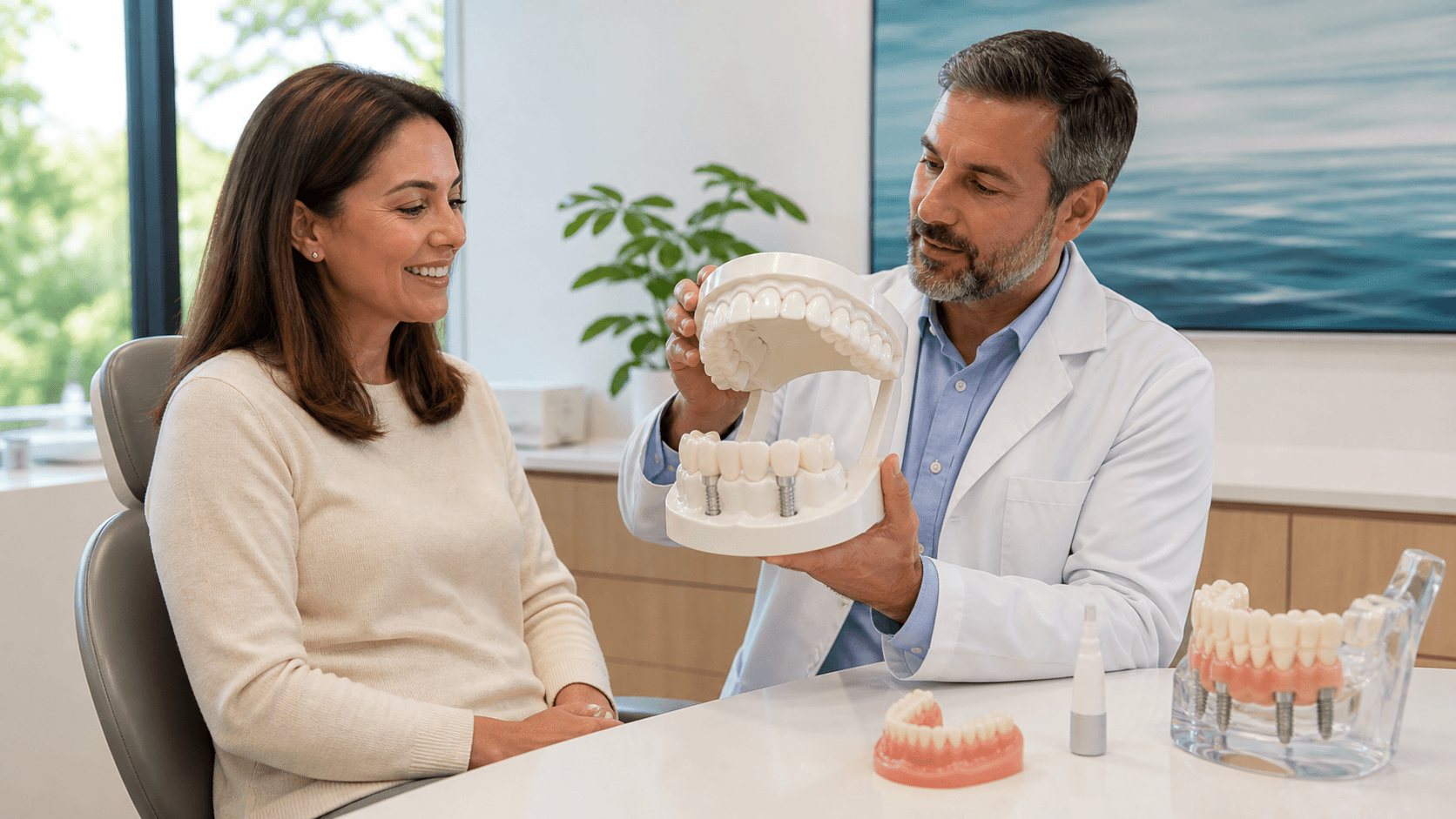
Overdentures are dentures that "snap" onto a few implants in your jaw. The implants act like little anchors, so the denture has something solid to connect to. The denture still comes out for cleaning, but when it is snapped in, it is much more stable than a regular denture. This is a great option if you want less rocking and more chewing power without moving straight to fixed teeth.
Full-arch implants use implants to support teeth that stay in place all the time. These are often called fixed teeth. You do not take them in and out every day. They are designed so you can eat, talk, and laugh more like you did with natural teeth. Imagine loving your smile every time you look in the mirror and enjoying meals without worrying about movement.
If you are tired of dealing with cups by the sink, pastes, or daily worry about movement, fixed implants may feel like a big relief.
Here are a few everyday differences:
- Comfort: Both overdentures and fixed implants feel more secure than traditional dentures. Fixed teeth usually feel the most like your own teeth, because they do not move.
- Cleaning: Overdentures are removed for cleaning, so you clean the denture and your gums. Fixed implant teeth stay in, and you brush them like natural teeth, with some simple tools to clean around the implants.
- Investment and timing: Overdentures can be a helpful middle step. Full-arch implants are a larger, long-term investment in comfort, confidence, and function.
Not everyone needs the most advanced option right away. Your health, your goals, and your budget all matter. Our role is to guide you, not pressure you, so you can choose the level of support that feels right.
When It's Time to Move Beyond Traditional Dentures
How do you know when regular dentures, even with relines and adhesive, are not enough anymore? Some clear signs are:
- You rely on adhesive every single day just to feel secure.
- You keep getting sore spots, and adjustments only help for a short time.
- You avoid steak, salads, crunchy apples, or other favorite foods because chewing feels unsafe.
- You feel self-conscious speaking at work, on video calls, or during family gatherings.
In real-life terms, overdentures are a strong upgrade if you are okay with removable teeth but want them to stay put when they are in. Fixed full-arch implants are usually best if you want "set it and forget it" teeth that stay in, even while you sleep.
Many people start with an overdenture to get more stability and freedom with food. Later, they choose to move to full-arch implants when they are ready for the next level of comfort and confidence. We often hear patients say that going into the cooler seasons and end-of-the-year gatherings with teeth they can trust makes meals, parties, and photos feel a lot more relaxed.
Taking the Next Gentle Step Toward Confident Eating
What if going to the dentist actually felt easy? That is the experience we work hard to create at Ridgetop Dental Implants. We want to be your trusted dental home, a place where patient care comes first and you feel heard and respected.
When you come in, we look carefully at your dentures, gums, and bite. We talk through what you are feeling day to day, and then explain whether a simple adjustment, a reline, an overdenture, or full-arch implants makes the most sense. Our modern, technology-driven approach helps us plan treatment that is precise, gentle, and designed for lasting results.
For patients who are ready for a major upgrade, we also offer same-day full-arch implant options with our signature approach:
One Visit Fixed Teeth with Full Arch Dental Implants
You are in good hands. There is no judgment, only solutions, and we make it easy to move at a pace that feels right for you so you can smile with confidence, enjoy your favorite foods, and feel like yourself again.
Regain Comfortable, Confident Eating With a Stable Smile
If loose or uncomfortable dentures are getting in the way of your daily life, we can help you understand your options with our detailed comparison of Overdentures vs. implants. At Ridgetop Dental Implants, we will walk you through which solution best matches your goals, budget, and lifestyle. Ready to explore a more secure, natural-feeling smile and get your questions answered one-on-one? Reach out today and contact us to schedule a consultation.