When Your Dentures Keep Slipping Again and Again
Loose dentures can turn simple moments into stressful ones. You are trying to enjoy dinner with friends, and you feel your teeth shift. You are on the phone, and you hear clicking every time you say certain words. You may find yourself using your tongue to hold things in place or worrying that someone will notice.
If this sounds familiar, you are not alone. Dentures that once felt snug often start slipping, rubbing, or creating sore spots as time goes on. It is not because you did anything wrong. Your mouth and jaw are naturally changing, and your denture is still shaped for how things used to be, not how they are now.
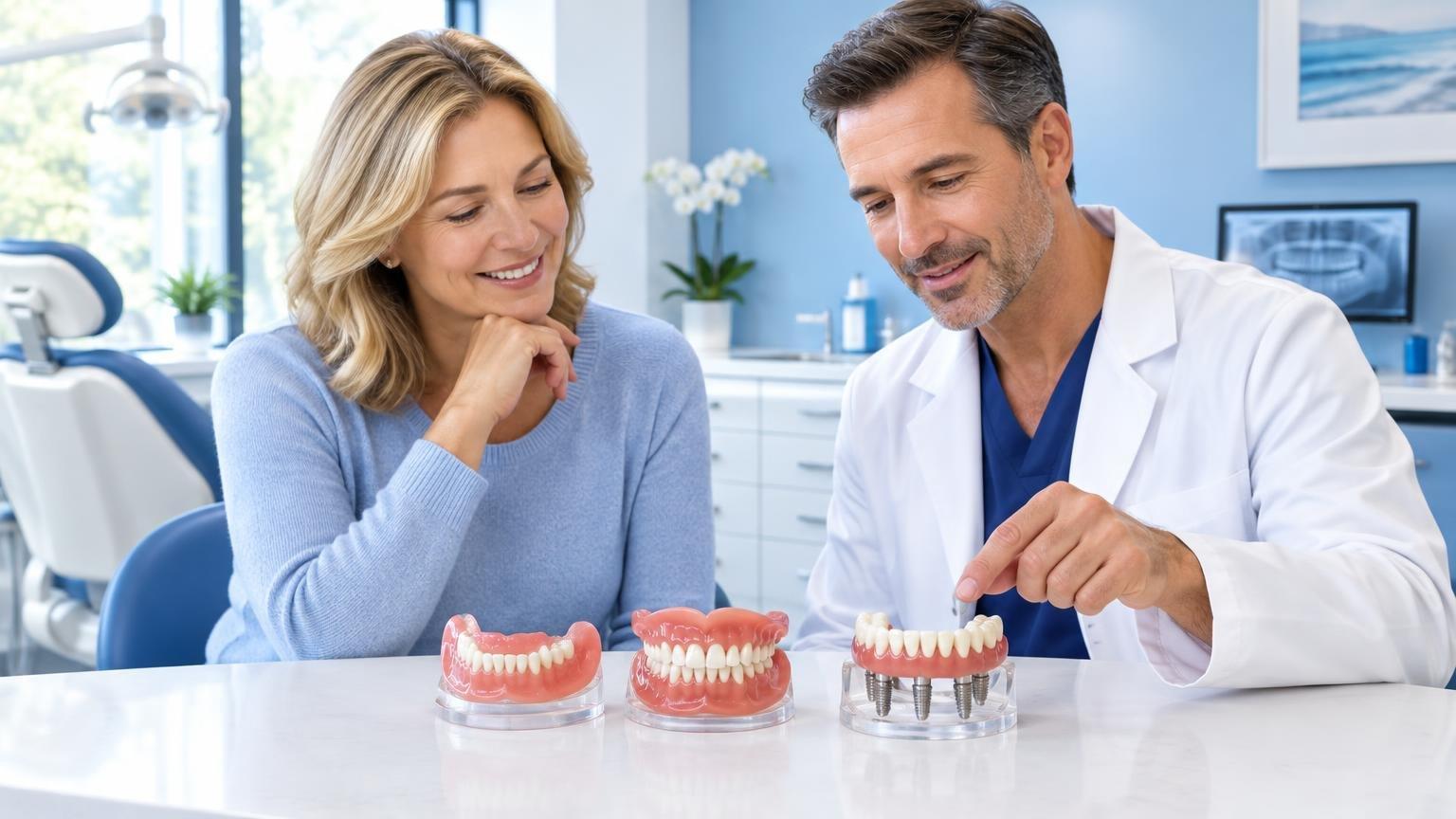
When that happens, you usually have three main paths to think about:
- Reline your current dentures
- Make new dentures
- Choose dental implants as a more permanent treatment for slipping dentures
Each option can be shaped to your needs. Our role is to help you find what fits your mouth, your lifestyle, and your comfort, so you can enjoy favorite foods and family time without constantly thinking about your teeth.
Why Your Dentures Change Fit Over Time
After teeth are removed, the bone and gums do not stay the same forever. The bone that once held your teeth slowly shrinks and reshapes. This is most noticeable in the first few years, but the process can continue over time. Your denture, however, stays the same shape it was on the day it was made.
That slow change is why a denture that felt perfect at first can start to:
- Slip when you talk or laugh
- Rub and create sore spots
- Need more and more adhesive just to stay put
You might notice:
- Red spots or tenderness under the denture
- Changes in your speech or a lisp that was not there before
- A bite that feels off, like your teeth do not meet in a natural way
Some people also see changes in their facial shape, such as a more "collapsed" or sunken look around the mouth and cheeks. This can make you feel less like yourself, which can be upsetting.
If you are tired of adjusting your denture in private or feeling anxious in social settings, please know that there is hope. Modern options are gentler and often simpler than many people expect. You do not have to keep "fighting" with your dentures every day.
When a Denture Reline Is Enough
A denture reline is like reshaping the inside of a shoe so it fits your foot better again. We keep the outside of your denture just as it is, including how it looks when you smile. We only change the inner surface that rests on your gums so it hugs your mouth more closely.
Relines can be:
- Soft, for tender gums or when you need extra cushioning
- Hard, for a longer-lasting, more snug base
A reline can be a good choice when:
- Your denture is still in good shape and not too old
- You mostly like how it looks and just want it to feel more secure
- You recently had changes in weight or health and noticed new looseness
- You want a budget-friendly, shorter-term fix while you think about long-term plans
Many people feel quick relief after a reline, with less rubbing and fewer sore spots. It can bring back comfort and confidence for a while. Still, it is important to know that a reline does not stop the natural changes in bone and gums. Over time, the fit can shift again, and you may find yourself needing another reline or a different solution.
When It Is Time for New Dentures
Every denture has a "service life." At some point, it has simply done its job. You might notice:
- Cracks, stains, or worn-down teeth
- A bulky or unstable feeling even after more than one reline
- Wrinkles or a sunken look around the mouth because the denture no longer supports your facial muscles
When that happens, starting fresh with a new design can be a big relief. New dentures give us the chance to:
- Update tooth shape and shade so your smile matches who you are now
- Use modern techniques and materials that can feel lighter and more natural
- Rebalance your bite so chewing is easier and more comfortable
We take our time with this step. A typical visit might include:
- Photos of your smile and face
- Gentle digital scans so we can see how your jaw and bite come together
- A relaxed talk about what you do and do not like about your current denture
Many people put off new dentures because they worry it will be a big ordeal. Then they see their new smile and feel like they look more rested and confident again. Even if you are considering implants later, a well-designed new denture can be a smart stepping stone and can be made with implant plans in mind.
Implants as a Permanent Solution to Slipping Dentures
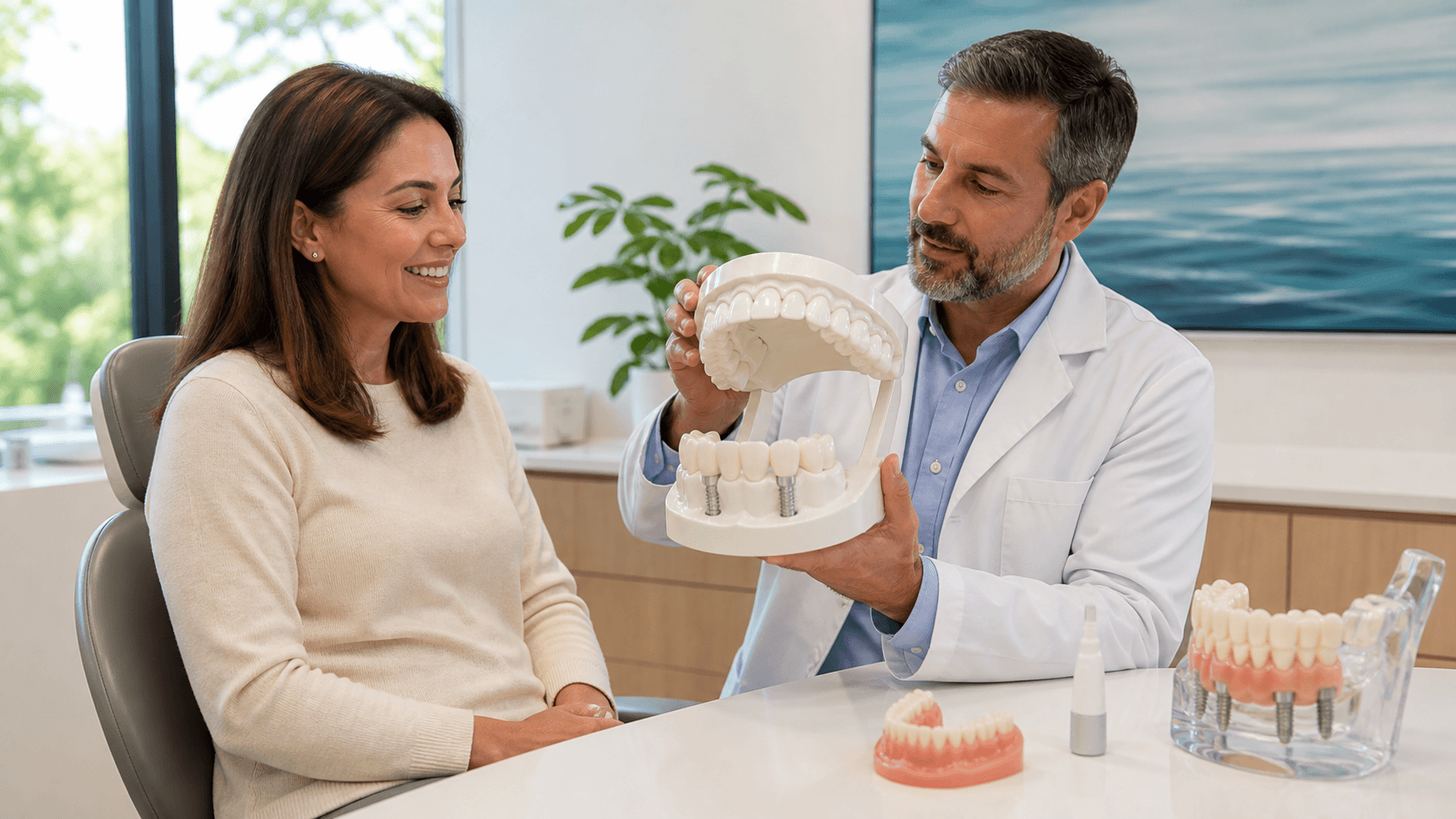
Dental implants are small posts that act like new roots in the jaw. They connect to replacement teeth and help hold them steady, so they do not slide around when you talk, laugh, or eat. Instead of a "floating" denture, you get teeth that feel more locked in place.
Implant-supported options can:
- Let you bite into firmer foods with more confidence
- Help your speech sound clearer, since teeth stay where they should
- Reduce or remove the need for denture adhesive
- Help support the jawbone where teeth are missing
There are several styles to know about:
- Full-arch, same-day solutions that replace a whole upper or lower set of teeth with a fixed bridge
- Implant-retained dentures that snap in and out for cleaning but feel far more stable than a regular denture
- Single-tooth implants and small bridges for people missing just one tooth or a few teeth
Many people who struggled for years with loose dentures describe implants as feeling like they have their own teeth back. At Ridgetop Dental Implants in Northern Virginia, we plan this type of care with advanced 3D imaging and guided placement. That lets us map out the treatment in detail so we can focus on comfort, accuracy, and a smooth visit.
The process is very personalized. We listen to your story, review your health and X-rays, and go step by step, so you always know what is next. Our goal is to build trust and keep you comfortable throughout, not rush you or pressure you.
How to Decide What Is Right for You
When your denture fit keeps changing, it helps to ask yourself a few key questions:
- Do I want a quick tune-up, or am I ready for a permanent treatment for slipping dentures?
- Is my top priority the lowest number of visits, the longest-lasting result, or the least change from what I have now?
- How do I want to feel when I eat, speak, and smile a year from now?
Here is a simple way to compare your options:
- Denture reline: Good for newer dentures with mild looseness, when you like the look and want a short-term, budget-friendly fix.
- New dentures: Better when your current set is old, worn, or no longer matches how you want to look and feel.
- Implants: Best for people who want firm, reliable stability, more natural chewing, and a long-term solution with less daily worry.
At Ridgetop Dental Implants, we see ourselves as your partners in this decision. We listen first, then explain your choices in plain language so you can choose with confidence. There is no judgment, only solutions that fit your health, your lifestyle, and your goals.
However you move forward, you deserve teeth that feel steady and comfortable, so you can focus on living your life, not managing your dentures. You are in good hands, and there is a path to a smile you can trust every single day.
Discover a Stable, Worry-Free Smile Today
If your dentures slip, pinch, or make it hard to enjoy meals, we can help you find a long-lasting solution. At Ridgetop Dental Implants, we specialize in permanent treatment for slipping dentures that can restore comfort and confidence in your daily life. Reach out to our team with your questions or to schedule a visit through our contact page.