Start Fresh Without Grafts: Is Graftless Right for You?
Dental implants without a bone graft can sound almost too good to be true, especially if you have been told you do not have enough bone. Many people feel worried about extra surgeries, longer recovery, or the idea of working near the sinuses. If that is you, you are not alone, and you are not out of options.
Thanks to modern 3D CT scans, careful planning, and smart implant angles, graftless treatment is possible for many people who were once told "no." Our goal is to help you understand when that kind of approach could work, and when a graft really is the safest path. Think of this as a friendly checklist to help you decide if it is time to explore a second look at your smile before the holidays roll around.
At our implant center, patient comfort comes first. There is no judgment about past dental history, only calm, clear solutions that respect your schedule, your health, and your goals.
Why "Not Enough Bone" May Not Be the End of the Story
Hearing "you do not have enough bone for implants" can feel like a door slamming shut. Often this means the jawbone has shrunk after tooth loss, gum disease, or years of wearing dentures. The ridge may look flat or narrow on a basic X-ray, so a bone graft is suggested as the only answer.
What many people do not realize is that it is not just about how much bone you have. It also matters where the bone sits, how dense it is, and what shape it has. A thin area in one spot may be balanced by thicker, stronger bone nearby that can safely hold angled implants.
With advanced 3D CT scans, we can:
- See the jawbone from every side, not just in a flat picture
- Measure the exact height and width of bone in key spots
- Spot strong anchor areas that are not obvious on regular X-rays
Sometimes, a person is told they need large bone grafts, but a detailed CT review shows that implants can be placed at specific angles without extra grafting. Every mouth is unique, and a precise second opinion can completely change the plan, often with fewer surgeries and a shorter healing time.
CT Scan Secrets: How We Look for Graftless Options
A dental CT scan is a quick, 3D picture of your teeth, jawbone, nerves, and sinuses. You stand or sit still for a short time while the scanner moves around your head. It does not hurt, and it is over in just a few minutes.
On this scan, we look for several details that can support dental implants without a bone graft:
- Enough bone height and width in key support zones
- Clear position of nerves and sinuses so we can stay a safe distance away
- Areas of denser bone that can hold longer or angled implants
- Spaces between important structures where we can place implants smartly
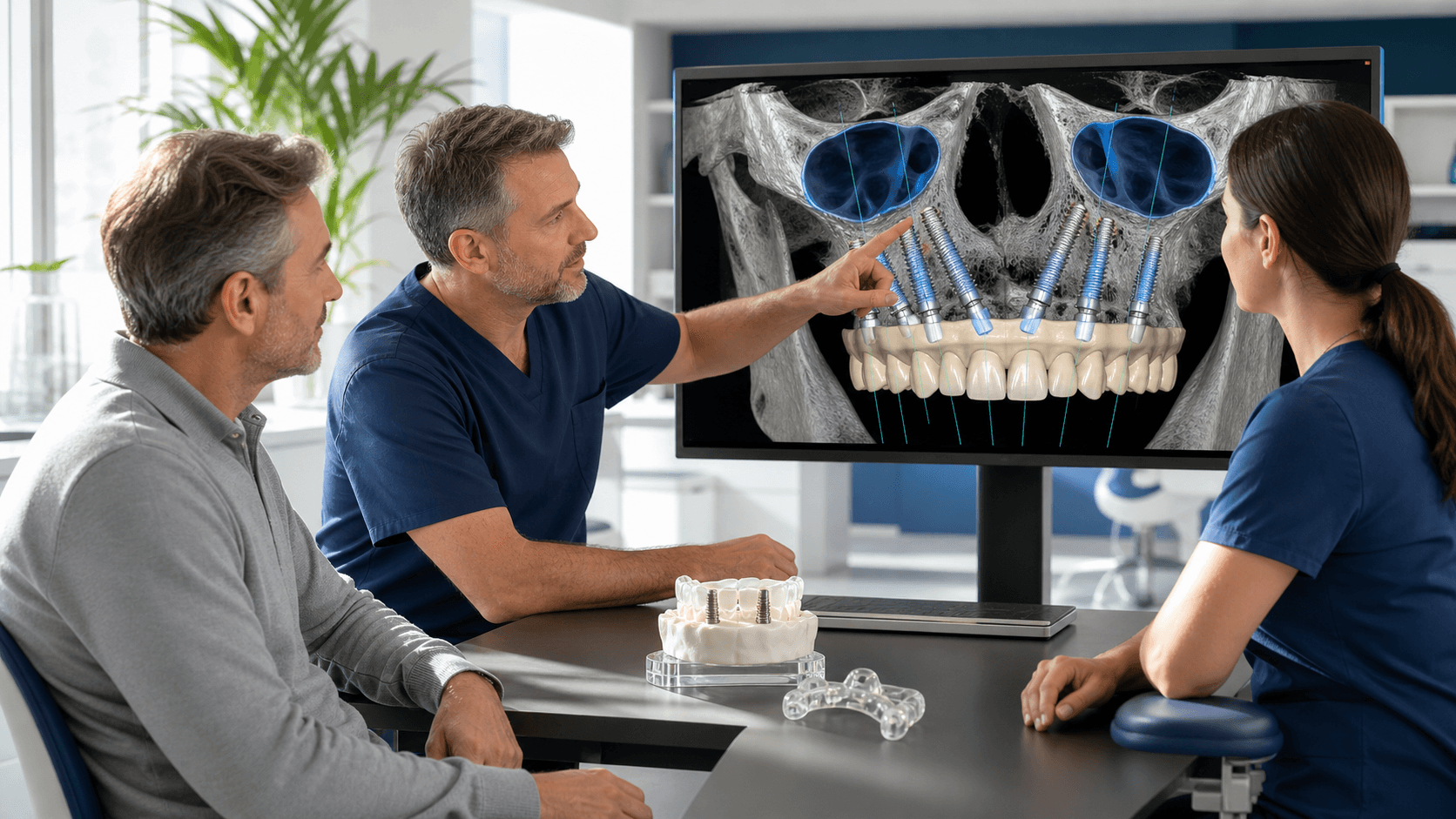
Before any real surgery, we "virtually place" the implants inside the CT scan on a computer. This lets us plan exact angles, lengths, and positions ahead of time. When treatment day comes, the procedure is more precise and often smoother for you.
Better planning usually means:
- Less time in the chair
- Less swelling and soreness afterward
- More predictable, confident results
For many people, this simple scan is the key step that opens the door to graftless, same-day solutions.
Sinus Position and Upper Implants: When We Can Work Around It
The sinus is an air space above your upper back teeth. When teeth are missing for a while in this area, the sinus can "drop" lower, and the bone underneath can become thinner. This is why some people are told they must have a sinus lift, a type of bone graft, before getting implants.
On the CT scan, we study exactly where your sinus sits and how much bone is under it. Graftless treatment may be possible when:
- The sinus is positioned higher, leaving more natural bone below
- There is a thick ridge of bone in front of the sinus that can support angled implants
- There are strong anchor zones near the front or mid-part of the upper jaw for full-arch bridges
With modern techniques, we can often place implants at a gentle tilt to avoid the sinus while still reaching strong bone. For full-arch solutions, we may not need implants in every missing tooth spot. Instead, a smaller number of well-placed implants can support a full bridge.
If your CT scan shows that a sinus lift truly is the safest, longest-lasting option, we explain it in clear, calm language so you know what to expect. But many patients are relieved to learn that careful planning lets them skip sinus grafting altogether.
Smart Implant Angles and Full-Arch Options Without Grafting
Many people picture implants going straight up and down, like fence posts. In reality, angled implants can be just as strong when planned correctly. In some cases, they are the smarter and safer choice.
We use implant angles to:
- Avoid thin bone areas while still reaching stronger bone behind or in front
- Keep a safe distance from nerves and sinuses
- Spread support across your whole arch for a stable full bridge
For a full-arch of teeth on implants, we often focus on the front part of the jaw, where bone is usually stronger, and then angle some implants backward. This helps us create a firm base for a same-day bridge without needing grafts in the back.
The lifestyle benefits can be life-changing:
- Fewer surgeries overall
- Often same-day temporary teeth on your implants
- A faster path back to eating, speaking, and smiling with confidence
We plan these angles on the CT scan first, then use guides or advanced tools during your visit so placement is gentle, accurate, and focused on your comfort.
Are You a Graftless Implant Candidate? Simple Self-Check
Wondering if it is worth asking about dental implants without a bone graft? This quick checklist can help you decide if a visit might make sense:
- You have been told you do not have enough bone and want a careful second opinion
- You feel nervous about extra surgeries like bone grafts or sinus lifts
- You are missing many or all teeth and want something more stable than a removable denture
- You would love a faster smile transformation, ideally with same-day or fewer visits
Final candidacy always depends on your CT scan, your health history, and your personal goals. Sometimes grafting truly is the best way to give you strong, long-lasting results, and when that is the case, we approach it as gently as possible.
At Ridgetop Dental Implants in Northern Virginia, we welcome your questions, your past records, and your concerns. Fall is a natural time for fresh starts, and it can also be a calm season to take that first step toward smiling, eating, and living with more comfort again. You are in good hands, and there is no judgment, only solutions shaped around you.
Discover a Stable Tooth Replacement Option That Fits Your Needs
If you have been told you do not have enough bone for traditional implants, our team can often help with carefully planned Dental implants without a bone graft. At Ridgetop Dental Implants, we take time to understand your goals, review your scans, and explain every step so you know exactly what to expect. If you are ready to explore whether this approach is right for you, contact us to schedule a personalized consultation.