How Dental Implants Help Protect Your Jaw Health
When a tooth is lost, the change is not only in your smile. Your jawbone also starts to change shape over time. Many people notice their bite feels different, their dentures feel loose, or their face looks a little more "sunken." That is not in your head; it is your bone quietly reshaping itself.
The good news is that jawbone loss with implants can often be slowed or stabilized. It is rarely "too late" to ask questions or to look for help. Our goal is to explain how your bone behaves, why timing after tooth loss matters, and what kind of real-world results you can expect when you choose modern implant care.
At our implant-focused office in Northern Virginia, patient care comes first. We believe in comfort, clear explanations, and true partnership. As the weather cools and people start thinking about the year ahead, it can be a gentle time to start planning for a healthier, more confident smile.
How Your Jawbone Changes After Tooth Loss
When you lose a tooth, the part of your jaw that used to hold that tooth root no longer gets regular chewing signals. Your body is very smart and very efficient. It tends to "recycle" any bone that does not seem needed.
Here is what usually happens when a tooth is missing for a while:
- The bone in that area slowly shrinks or thins
- The ridge of the gum can look flatter or narrower
- Neighboring teeth may start to shift or tilt
- Your bite can feel different or less stable
People often notice signs like:
- Dentures that do not fit as snugly as before
- Needing more adhesive or more adjustments
- A slightly "collapsed" or wrinkled look around the lips
- Food feeling harder to chew on one side
All of this is normal biology, not a personal failure. Your body is trying to be efficient, but the result is not always what you want for your face or your bite. The key is that jawbone loss with implants does not have to keep racing forward at the same pace. An implant gives the bone a real job again, so it has a reason to stay strong.
If it has been many years since your last dental visit, you are still welcome. Your trusted dental home should be a place of calm, not shame. We believe in no judgment, only solutions.
Wolff's Law Made Simple: Why Bone Loves Gentle Workouts
There is a simple rule about bone, known as Wolff's Law. In plain words, bone becomes stronger when it is used, and it becomes thinner when it is not. You can think of it like muscles. If you use a muscle, it grows and stays firm. If you hardly use it, it gets smaller over time.
Your jawbone works the same way:
- A natural tooth or implant root presses gently on the bone when you chew
- That pressure is like a daily "workout" for your jaw
- The bone responds by staying denser and more stable
Traditional dentures are different. They sit on top of the gums instead of being anchored inside the bone. Because they are not connected like tooth roots, they do not pass the same healthy signals into the bone. In some spots, they can even rub and wear down the ridge faster.
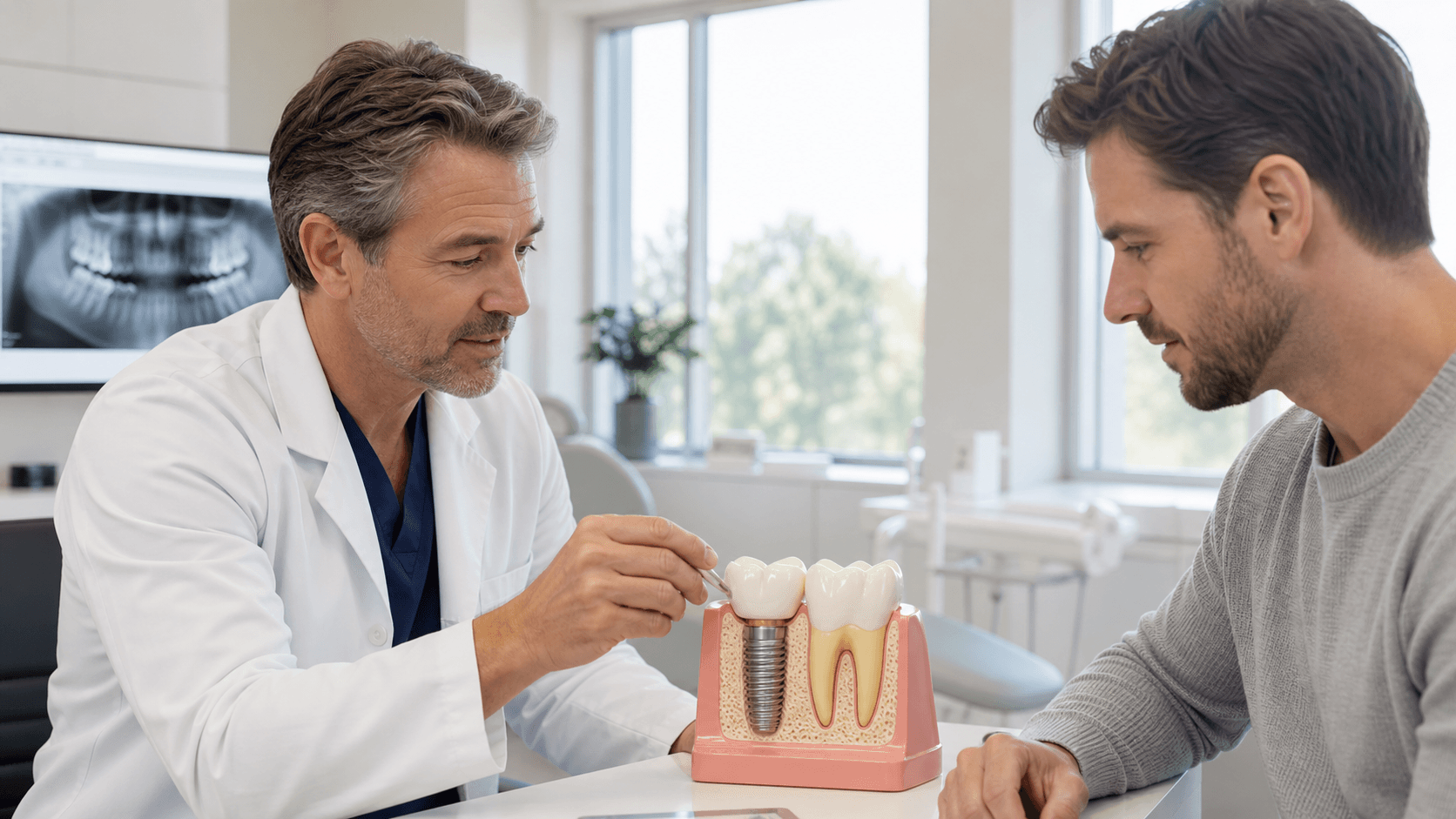
Dental implants are shaped and placed to act like natural tooth roots. When you bite and chew, the implant sends gentle forces into the jaw, and your body reads that as "this bone is needed, keep it." Many patients with full-arch implant support notice their lips and cheeks look more filled out again, instead of feeling "collapsed" around the mouth. They feel more like themselves in photos, which can be especially meaningful during family gatherings and special events.
Timing Matters: When to Consider Implants After Tooth Loss
Bone changes tend to happen in a pattern after a tooth is lost. The fastest changes usually happen in the first months, then things keep slowly shifting over time.
In general:
- The first 6 to 12 months often see the quickest bone shrinkage
- After that, the bone keeps remodeling, but at a slower pace
- The longer an area is missing a tooth, the more the ridge may thin
This is why earlier is usually easier for implants. Placing an implant sooner often means we can use more of your natural bone. But "earlier" does not mean "only." Many people wait years, even decades, before they feel ready. Helpful options still exist.
Here is how timing and treatment can connect:
- Early placement can help preserve more of your original jaw shape
- If the bone has already thinned, bone grafting may help rebuild support
- For multiple missing teeth, full-arch implant solutions can create a strong new base even with past bone loss
We hear common worries such as, "Is it too late for me?" In most cases, it is not. Another concern is, "Will this be painful or very complicated?" Modern, gentle techniques, thoughtful sedation options, and careful planning usually make treatment more comfortable than people expect.
Advanced technology is a big part of that comfort. With 3D imaging, we can see the height, width, and density of your bone from many angles. Digital planning lets us choose implant positions with care so we can shorten chair time and reduce surprises. Whether you lost a tooth last month or many years ago, a personal evaluation can map out realistic next steps at a pace that feels right for you.
What Results You Can Realistically Expect with Implants
It helps to have a clear, honest idea of what implants can and cannot do for jawbone loss. Dental implants are powerful tools, but they are not magic.
Here is what they usually can do:
- Help maintain the bone that is still there
- Slow down further bone loss in that specific area
- Provide a firm base for teeth that look and feel natural
Here is what they cannot do:
- Bring back bone that has already been resorbed without added grafting
- Instantly "reverse" years of change in a single day
Even so, the day-to-day changes many people feel are very real:
- Stronger, more confident chewing, even on foods they avoided before
- Less fear of teeth slipping or clicking during a laugh or a meal
- A fuller, more supported look around lips and cheeks, especially with full-arch work
Healing and full bone bonding take time. It usually takes several months for the bone to grow tightly around an implant. The biggest lifestyle change often comes when the final teeth are placed, but many patients feel better even with well-made temporary teeth. They start saying "yes" to dinners, trips, and photos again.
We have seen people who once hid their smiles or stood at the back of group pictures later come back glowing, eager to show off holiday photos where they smiled with confidence in every frame. That kind of ease is what we want for you.
Take the Next Gentle Step Toward a Stronger Smile
As you think about the months ahead, it can help to pause and ask yourself a simple question: How would it feel to chew comfortably, smile without worry, and know your jawbone is being supported, instead of slowly drifting away?
With focused implant care, advanced imaging, and a calm, caring approach, we make it easy to understand your options. At Ridgetop Dental Implants, patient care comes first. You are in good hands with a team that works with implants every day and truly cares about your comfort and long-term results.
Preserving your jawbone and rebuilding your smile is not something you have to handle on your own. Your trusted dental home in Northern Virginia is ready with gentle care, clear explanations, and steady support, so you can move toward a stronger, more confident smile at a pace that feels right for you.
Protect Your Smile From Bone Loss And Restore Confident Function
If you are concerned about jaw bone loss with implants, we can evaluate your oral health and design a treatment plan that supports long-term stability. At Ridgetop Dental Implants, we focus on preserving bone and helping you maintain a strong, comfortable bite. Reach out so we can review your options together and answer your questions in detail, or contact us to schedule a visit and take the next step toward a healthier foundation for your implants.